 Il giappone é il Paese dei contrasti: amore sfrenato della natura, caccia alla balena,ai rifiuti tossici buttati in mare .
Paese di estrema cortesia, profonda crudeltá, estrema modernitá e amore delle tradizioni.
In questo contesto di maniacale follia nacque la rosa ’Applause’. L’epica rosa blu, la chimera che nel 2008 fece la sua apparizione nel mercato.
La rosa bon ha il gene blu, che i Giapponesi estrapolarono dal delphinium. Il primo sucesso, l’ ebbero von le petunie e i garofani, ma le rose erano ostiche e non ne volevano sapere.
Dopo snni di ricerca riuscirono in questa impresa.
Io sapevo che era una ditta australiana a seguire quest impresa Titanica, ma appartiene appunto alla Suntori, che tra l altro é un leader mondiale nel campo degli alcolici( Courvoisier e whisky, Kirin) e bevande gassate ( orangina, ribena )ed si occupano della deputarazione delle acque. In questo contesto pazzo nasce questa rosa geneticamente modificata. Non si può nesnche incrociare la rosa applause perché se si rinscontrasse che una rosa possiede il suo gene si rischiano multe Da capogiro.
Per maggiori info leggere testo in inglese Qui sotto.
Blue roses, blue chrysanthemums, and blue carnations: exist. They are genetically modified, and it is an incredible work from the Suntory groupuntory Beverage & Food Limited (サントリーホールディングス株式会社 Santorī Hōrudingusu Kabushiki-Gaisha) is a Japanese brewing and distilling company group. Established in 1899, it is one of the oldest companies in the distribution of alcoholic beverages in Japan, and makes Japanese whisky. Its business has expanded to other fields, and the company now also makes soft drinks and operates sandwich chains. With its 2014 acquisition of Beam, Inc., it has diversified internationally and become one of the largest makers of distilled beverages in the world. Suntory is headquartered in Dojimahama 2-chome, Kita-ku, Osaka, Osaka Prefecture. Suntory is a leader in the Beverage field and owns: Orangina, Courvoisier, Lucozade and Ribena and several whisky brands.
.”Nobody could produce blue roses by hybridization breeding no matter how much they were desired. However, "the impossible" has become possible due to cutting-edge biotechnologies and the continuous efforts of scientists dedicated to producing blue roses. Senior General Manager, Yoshikazu Tanaka, Ph.D., who has participated in the blue rose project since the initiation of the project, Principal Researcher Yukihisa Katsumoto, Ph.D., who still engages in the study as the project leader, and Researcher Noriko Nakamura, Ph.D. talked about their passion and aspirations that led to the success of the development of blue roses.
1990 The Blue Rose Project started
Project members then: Australia (1990)
Producing blue roses---The challenge to the impossible started in 1990. Suntory decided to tackle this dreamful project in collaboration with an Australian venture company Florigene Ltd. (named Calgene Pacific Pty Ltd. then; hereinafter referred to as Florigene). Thanks to the rapid advancement of plant biotechnologies in the 1980s, it was expected that blue roses could be developed with these technologies. Thus, there were many research teams engaged in similar projects to produce blue roses in the world, and the competition had already started under cover.
Researchers at Suntory: Japan (back in those days)
There were two technical barriers that had to be solved to produce blue roses. One was to "isolate genes (blue genes) necessary to synthesize a blue pigment (delphinidin) from among tens of thousands of genes contained in blue flowers." The other was to "develop the methods to introduce these genes to cells of roses and produce genetically modified roses from these cells." It was especially necessary to solve the first issue of isolation of blue genes earlier than the rivals and apply for the patent of the gene because such genes were patentable.
The challenge to produce "blue roses," which signify the impossible, started. −-Senior General Manager Yoshikazu Tanaka Ph.D.
Researcher's aspiration
Blue genes were isolated from petunias, and the patent of the gene was filed
There are many plants that produce blue flowers in nature, but our research team first chose a petunia exhibiting a dark violet color in order to isolate blue genes. This was because the petunia had already served as a model plant for the research of flower pigments (such as anthocyanin) and their biosynthesis and the following knowledge had already accumulated:
Petunia from which blue genes were isolated
- Blue genes are cytochrome P450 type hydroxylase (enzymes involved in detoxification in the liver) genes.
- These genes work in petals but not in leaves.
- Red petunias that do not produce blue pigments do not have blue genes.
- Blue genes work most actively when petals are opening.
- Gene loci on the chromosomes were known.
We selected about 300 kinds of candidate genes from about 30,000 kinds of genes in petunias in order to identify the two blue genes of petunias. Our first plan was to introduce the candidate genes into petunias and observe flower color changes to determine whether they were actually blue genes. However, this method required several months until flowers bloomed to see color change. Therefore, to reduce the time required to obtain results, we decided to introduce the candidate genes of blue genes to yeast instead of plants and test their enzymatic activities in yeast. Thanks to this method, we obtained results in one week and were able to test the activities of many genes.
Finally, we succeeded in isolating blue genes on June 13, 1991.
A page of a laboratory notebook filled on June 13, 1991
Suntory and Florigene immediately applied for the patent of the blue genes. Because we applied for the patent earlier than any other competitors and monopolized the intellectual property right, we were able to engage in this research eliminating any competitors. We were also lucky to be granted with broad claims because our applications were the first ones for patents of genes with this kind of activity. Actually, introduction of these genes into petunias and tobacco resulted in the increase of blue pigments "delphinidin." Our paper describing these results was published in "Nature," the most prestigious scientific journal in the world.
The time when we discovered blue genes was the happiest moment of my research life. −-Senior General Manager Yoshikazu Tanaka Ph.D.
Researcher's aspiration
1994 Roses into which petunia blue genes were introduced flowered, but they showed no hint of blue
There are several methods to introduce genes into plants. In the blue rose project, we adopted a method of introducing them with using a soil bacterium called "Agrobacterium." Because this bacterium has the ability to carry its own genes into plant cells, it is used in the gene transfer of many plants. To select only cells that have received the genes after transfer and regenerate them into the plant body of roses, it is necessary to optimize plant hormones as well as kinds and concentrations of nutrients. The work to perform this procedure in sterilized conditions, using a plant in a test tube, is called "tissue culture."
Repeated tissue culture, learning through trial and error (back in those days)
In the case of roses, it takes about one year from the introduction of genes to the blooming. How effectively the introduced genes function differs from one genetically modified rose to another, so we have to produce as many genetically modified roses as possible. Efficiency of gene introduction also differs substantially by rose variety. Therefore, we continued tissue culturing, learning through trial and error
Finally, we were able to introduce genes to red roses. For the first time in 1994, roses to which two kinds of blue genes of petunia opened. However, the color of the flowers was still red and no blue pigment was detected although the genes were introduced without a doubt.
Color changes or delphinidin were not observed even after many promoters (DNA sequence regulation gene expression) were used to drive petunia blue genes. Thus, we decided to introduce blue genes other than from petunias to roses. We isolated blue genes from various plants with blue flowers, such as gentian, butterfly pea, and torenia, and introduced them into roses. However, no matter how many times we conducted experiments, only "roses with blue genes but without blue pigments" bloomed.
We even suspected that roses might decompose blue pigments.... −-Senior General Manager Yoshikazu Tanaka Ph.D.
Researcher's aspiration
We had many failures, but each of them taught us a useful lesson for the future −−Principal Researcher Yukihisa Katsumoto Ph.D.
Researcher's aspiration
1995 Succeeded in producing blue carnation
Moonseries
We could not harvest the fruits of our efforts, and hard times continued for the members involved in this project. What encouraged the researchers was the success of the development of genetically modified blue carnations. Blue genes of petunia did not work well in roses, but they worked as expected in carnations. The blue pigments "delphinidin" accumulated, and the color of flowers changed to blue.
These flowers, named "Moonseries," were put on sale in Japan in 1997, and the number of varieties has increased since then. These elegant and beautiful flowers, which signify "eternal happiness" in the language of flowers, have gained popularity.
Carnation production site (Ecuador)
Moonseries are the first genetically modified flowers in the world that were commercialized. Currently, these blue carnations are produced in Columbia and Ecuador, and are sold primarily in the USA, but in Europe and some countries as well. In Japan, six varieties with different dark and light color combinations are sold. Presently, not only blue genes of petunias but also those of pansies are used for some varieties.
"Blue carnations" were born using an additional gene to blue genes −-Senior General Manager Yoshikazu Tanaka Ph.D.
Researcher's aspiration
1996 Blue pigments finally accumulated in roses, too; flower color changed
Around that time, in addition to carnations, blue pigments started to be produced at last in roses by introducing blue genes isolated from a pansy. Clear color changes of roses were also finally observed. However, because we introduced these genes only into a red rose variety, these roses were far from something that could be called "blue rose," and their color was darkish red. Nevertheless, the production of blue pigments showed us a path to the birth of blue roses.
Even after blue pigments are produced, how blue the flower become depends greatly on the original characteristics of the roses to which genes are introduced. For example, if the pH is low (acidic) in the cell vacuoles in which blue pigments are accumulated, the color becomes red, and if it is neutral, the color becomes blue. The color also depends largely on whether components that can or cannot enhance blue exist in the vacuoles. In other words, the existence of blue pigments does not necessarily turn the flower color into blue.”(taken from the Suntory groupie website)
We therefore chose, from among several hundred varieties, about 40 rose varieties which would be likely to result in the accumulation of a high percentage of blue pigments and a more bluish color, including those that were not commercialized, and continued experiments to introduce the blue genes in order to produce roses that really would look blue. At the same time, we continued our research to improve methods of tissue culture so that genes could be introduced into various rose varieties.
Pathway to synthesize rose flower pigments
We were excited about the prospect of blue roses coming! −-Senior General Manager Yoshikazu Tanaka Ph.D.
Researcher's aspiration
Our research was worthwhile though we had to cope with pressure −−Principal Researcher Yukihisa Katsumoto Ph.D.
Researcher's aspiration
1998-2002 The percentage of blue pigments increased to 100%; blue roses were finally born
To introduce genes into rose cells, we first need to induce undifferentiated cells (called "callus") whose functions or morphology has not been determined yet. In other words, blue genes are introduced into calluses for which no determination has been made as to whether they may become a part of a leaf or a stalk. We regenerate these cells to produce flowers. It takes as long as one year to produce calluses, so this experiment takes time and requires extreme patience. The researchers patiently devoted themselves to continue the work of introducing the blue genes of pansies into calluses. This was a method originally developed by Suntory. This technique forms the basis of the development of blue roses because it enables the introduction of genes into many rose varieties.
Around 1998-1999, slightly bluish roses started to bloom. We further continued gene transfer, and due to that effort, roses which accumulated almost 100% of the total blue pigments bloomed. In 2002, we selected transgenic lines of pure blue from them. Finally, the first blue roses in the world were born. Further, we succeeded in propagating these roses by grafting, and confirmed that roses of the same color were produced stably and grown normally.
Pursued blueness by trying various varieties −-Senior General Manager Yoshikazu Tanaka Ph.D.
Researcher's aspiration
Developmental process of blue roses
2004 Finally the success of the development was announced
In June 2004, we publicly announced the first success of the development of blue roses in the world, and showed them publicly in the press conference room. We received huge responses. The success was reported on the front pages of various newspapers, and covered by mass media overseas. The general consumer was also greatly interested, and warm responses were received from many people, including elementary school students and the elderly. The stories of the development of blue roses are included in scientific textbooks, exhibited at the National Museum of Nature and Science, and used in many teaching materials. We published some papers on the scientific aspects of the development, and received the PCP Award of the Japanese Society of Plant Physiologists in 2009.
However, we had to overcome another and possibly the highest hurdle before delivering blue roses to consumers. Because the blue roses developed by Suntory are genetically modified organisms, it was necessary to obtain legal permits from the Ministry of Agriculture, Forestry and Fisheries and the Ministry of Environment based on Act on the Conservation and Sustainable Use of Biological Diversity through Regulations on the Use of Living Modified Organisms (so-called Cartagena Protocol) in order to grow them commercially and sell them in Japan.
blue roses
For that purpose we had to conduct various experiments to prove that the production and sales of the developed roses in Japan would not affect Japanese biological diversity. For example, we spent as long as four years to conduct hybridization experiments including cross-pollinating the blue roses with wild rose species in order to prove that there was no risk of dispersal of the introduced genes among wild roses. We obtained the permits on January 31, 2008.
The news on the birth of blue roses made headlines around the world −-Senior General Manager Yoshikazu Tanaka Ph.D.
Researcher's aspiration
We traveled to the wilderness in Hokkaido to obtain permits --Researcher Noriko Nakamura Ph.D.
Researcher's aspiration
Il giappone é il Paese dei contrasti: amore sfrenato della natura, caccia alla balena,ai rifiuti tossici buttati in mare .
Paese di estrema cortesia, profonda crudeltá, estrema modernitá e amore delle tradizioni.
In questo contesto di maniacale follia nacque la rosa ’Applause’. L’epica rosa blu, la chimera che nel 2008 fece la sua apparizione nel mercato.
La rosa bon ha il gene blu, che i Giapponesi estrapolarono dal delphinium. Il primo sucesso, l’ ebbero von le petunie e i garofani, ma le rose erano ostiche e non ne volevano sapere.
Dopo snni di ricerca riuscirono in questa impresa.
Io sapevo che era una ditta australiana a seguire quest impresa Titanica, ma appartiene appunto alla Suntori, che tra l altro é un leader mondiale nel campo degli alcolici( Courvoisier e whisky, Kirin) e bevande gassate ( orangina, ribena )ed si occupano della deputarazione delle acque. In questo contesto pazzo nasce questa rosa geneticamente modificata. Non si può nesnche incrociare la rosa applause perché se si rinscontrasse che una rosa possiede il suo gene si rischiano multe Da capogiro.
Per maggiori info leggere testo in inglese Qui sotto.
Blue roses, blue chrysanthemums, and blue carnations: exist. They are genetically modified, and it is an incredible work from the Suntory groupuntory Beverage & Food Limited (サントリーホールディングス株式会社 Santorī Hōrudingusu Kabushiki-Gaisha) is a Japanese brewing and distilling company group. Established in 1899, it is one of the oldest companies in the distribution of alcoholic beverages in Japan, and makes Japanese whisky. Its business has expanded to other fields, and the company now also makes soft drinks and operates sandwich chains. With its 2014 acquisition of Beam, Inc., it has diversified internationally and become one of the largest makers of distilled beverages in the world. Suntory is headquartered in Dojimahama 2-chome, Kita-ku, Osaka, Osaka Prefecture. Suntory is a leader in the Beverage field and owns: Orangina, Courvoisier, Lucozade and Ribena and several whisky brands.
.”Nobody could produce blue roses by hybridization breeding no matter how much they were desired. However, "the impossible" has become possible due to cutting-edge biotechnologies and the continuous efforts of scientists dedicated to producing blue roses. Senior General Manager, Yoshikazu Tanaka, Ph.D., who has participated in the blue rose project since the initiation of the project, Principal Researcher Yukihisa Katsumoto, Ph.D., who still engages in the study as the project leader, and Researcher Noriko Nakamura, Ph.D. talked about their passion and aspirations that led to the success of the development of blue roses.
1990 The Blue Rose Project started
Project members then: Australia (1990)
Producing blue roses---The challenge to the impossible started in 1990. Suntory decided to tackle this dreamful project in collaboration with an Australian venture company Florigene Ltd. (named Calgene Pacific Pty Ltd. then; hereinafter referred to as Florigene). Thanks to the rapid advancement of plant biotechnologies in the 1980s, it was expected that blue roses could be developed with these technologies. Thus, there were many research teams engaged in similar projects to produce blue roses in the world, and the competition had already started under cover.
Researchers at Suntory: Japan (back in those days)
There were two technical barriers that had to be solved to produce blue roses. One was to "isolate genes (blue genes) necessary to synthesize a blue pigment (delphinidin) from among tens of thousands of genes contained in blue flowers." The other was to "develop the methods to introduce these genes to cells of roses and produce genetically modified roses from these cells." It was especially necessary to solve the first issue of isolation of blue genes earlier than the rivals and apply for the patent of the gene because such genes were patentable.
The challenge to produce "blue roses," which signify the impossible, started. −-Senior General Manager Yoshikazu Tanaka Ph.D.
Researcher's aspiration
Blue genes were isolated from petunias, and the patent of the gene was filed
There are many plants that produce blue flowers in nature, but our research team first chose a petunia exhibiting a dark violet color in order to isolate blue genes. This was because the petunia had already served as a model plant for the research of flower pigments (such as anthocyanin) and their biosynthesis and the following knowledge had already accumulated:
Petunia from which blue genes were isolated
- Blue genes are cytochrome P450 type hydroxylase (enzymes involved in detoxification in the liver) genes.
- These genes work in petals but not in leaves.
- Red petunias that do not produce blue pigments do not have blue genes.
- Blue genes work most actively when petals are opening.
- Gene loci on the chromosomes were known.
We selected about 300 kinds of candidate genes from about 30,000 kinds of genes in petunias in order to identify the two blue genes of petunias. Our first plan was to introduce the candidate genes into petunias and observe flower color changes to determine whether they were actually blue genes. However, this method required several months until flowers bloomed to see color change. Therefore, to reduce the time required to obtain results, we decided to introduce the candidate genes of blue genes to yeast instead of plants and test their enzymatic activities in yeast. Thanks to this method, we obtained results in one week and were able to test the activities of many genes.
Finally, we succeeded in isolating blue genes on June 13, 1991.
A page of a laboratory notebook filled on June 13, 1991
Suntory and Florigene immediately applied for the patent of the blue genes. Because we applied for the patent earlier than any other competitors and monopolized the intellectual property right, we were able to engage in this research eliminating any competitors. We were also lucky to be granted with broad claims because our applications were the first ones for patents of genes with this kind of activity. Actually, introduction of these genes into petunias and tobacco resulted in the increase of blue pigments "delphinidin." Our paper describing these results was published in "Nature," the most prestigious scientific journal in the world.
The time when we discovered blue genes was the happiest moment of my research life. −-Senior General Manager Yoshikazu Tanaka Ph.D.
Researcher's aspiration
1994 Roses into which petunia blue genes were introduced flowered, but they showed no hint of blue
There are several methods to introduce genes into plants. In the blue rose project, we adopted a method of introducing them with using a soil bacterium called "Agrobacterium." Because this bacterium has the ability to carry its own genes into plant cells, it is used in the gene transfer of many plants. To select only cells that have received the genes after transfer and regenerate them into the plant body of roses, it is necessary to optimize plant hormones as well as kinds and concentrations of nutrients. The work to perform this procedure in sterilized conditions, using a plant in a test tube, is called "tissue culture."
Repeated tissue culture, learning through trial and error (back in those days)
In the case of roses, it takes about one year from the introduction of genes to the blooming. How effectively the introduced genes function differs from one genetically modified rose to another, so we have to produce as many genetically modified roses as possible. Efficiency of gene introduction also differs substantially by rose variety. Therefore, we continued tissue culturing, learning through trial and error
Finally, we were able to introduce genes to red roses. For the first time in 1994, roses to which two kinds of blue genes of petunia opened. However, the color of the flowers was still red and no blue pigment was detected although the genes were introduced without a doubt.
Color changes or delphinidin were not observed even after many promoters (DNA sequence regulation gene expression) were used to drive petunia blue genes. Thus, we decided to introduce blue genes other than from petunias to roses. We isolated blue genes from various plants with blue flowers, such as gentian, butterfly pea, and torenia, and introduced them into roses. However, no matter how many times we conducted experiments, only "roses with blue genes but without blue pigments" bloomed.
We even suspected that roses might decompose blue pigments.... −-Senior General Manager Yoshikazu Tanaka Ph.D.
Researcher's aspiration
We had many failures, but each of them taught us a useful lesson for the future −−Principal Researcher Yukihisa Katsumoto Ph.D.
Researcher's aspiration
1995 Succeeded in producing blue carnation
Moonseries
We could not harvest the fruits of our efforts, and hard times continued for the members involved in this project. What encouraged the researchers was the success of the development of genetically modified blue carnations. Blue genes of petunia did not work well in roses, but they worked as expected in carnations. The blue pigments "delphinidin" accumulated, and the color of flowers changed to blue.
These flowers, named "Moonseries," were put on sale in Japan in 1997, and the number of varieties has increased since then. These elegant and beautiful flowers, which signify "eternal happiness" in the language of flowers, have gained popularity.
Carnation production site (Ecuador)
Moonseries are the first genetically modified flowers in the world that were commercialized. Currently, these blue carnations are produced in Columbia and Ecuador, and are sold primarily in the USA, but in Europe and some countries as well. In Japan, six varieties with different dark and light color combinations are sold. Presently, not only blue genes of petunias but also those of pansies are used for some varieties.
"Blue carnations" were born using an additional gene to blue genes −-Senior General Manager Yoshikazu Tanaka Ph.D.
Researcher's aspiration
1996 Blue pigments finally accumulated in roses, too; flower color changed
Around that time, in addition to carnations, blue pigments started to be produced at last in roses by introducing blue genes isolated from a pansy. Clear color changes of roses were also finally observed. However, because we introduced these genes only into a red rose variety, these roses were far from something that could be called "blue rose," and their color was darkish red. Nevertheless, the production of blue pigments showed us a path to the birth of blue roses.
Even after blue pigments are produced, how blue the flower become depends greatly on the original characteristics of the roses to which genes are introduced. For example, if the pH is low (acidic) in the cell vacuoles in which blue pigments are accumulated, the color becomes red, and if it is neutral, the color becomes blue. The color also depends largely on whether components that can or cannot enhance blue exist in the vacuoles. In other words, the existence of blue pigments does not necessarily turn the flower color into blue.”(taken from the Suntory groupie website)
We therefore chose, from among several hundred varieties, about 40 rose varieties which would be likely to result in the accumulation of a high percentage of blue pigments and a more bluish color, including those that were not commercialized, and continued experiments to introduce the blue genes in order to produce roses that really would look blue. At the same time, we continued our research to improve methods of tissue culture so that genes could be introduced into various rose varieties.
Pathway to synthesize rose flower pigments
We were excited about the prospect of blue roses coming! −-Senior General Manager Yoshikazu Tanaka Ph.D.
Researcher's aspiration
Our research was worthwhile though we had to cope with pressure −−Principal Researcher Yukihisa Katsumoto Ph.D.
Researcher's aspiration
1998-2002 The percentage of blue pigments increased to 100%; blue roses were finally born
To introduce genes into rose cells, we first need to induce undifferentiated cells (called "callus") whose functions or morphology has not been determined yet. In other words, blue genes are introduced into calluses for which no determination has been made as to whether they may become a part of a leaf or a stalk. We regenerate these cells to produce flowers. It takes as long as one year to produce calluses, so this experiment takes time and requires extreme patience. The researchers patiently devoted themselves to continue the work of introducing the blue genes of pansies into calluses. This was a method originally developed by Suntory. This technique forms the basis of the development of blue roses because it enables the introduction of genes into many rose varieties.
Around 1998-1999, slightly bluish roses started to bloom. We further continued gene transfer, and due to that effort, roses which accumulated almost 100% of the total blue pigments bloomed. In 2002, we selected transgenic lines of pure blue from them. Finally, the first blue roses in the world were born. Further, we succeeded in propagating these roses by grafting, and confirmed that roses of the same color were produced stably and grown normally.
Pursued blueness by trying various varieties −-Senior General Manager Yoshikazu Tanaka Ph.D.
Researcher's aspiration
Developmental process of blue roses
2004 Finally the success of the development was announced
In June 2004, we publicly announced the first success of the development of blue roses in the world, and showed them publicly in the press conference room. We received huge responses. The success was reported on the front pages of various newspapers, and covered by mass media overseas. The general consumer was also greatly interested, and warm responses were received from many people, including elementary school students and the elderly. The stories of the development of blue roses are included in scientific textbooks, exhibited at the National Museum of Nature and Science, and used in many teaching materials. We published some papers on the scientific aspects of the development, and received the PCP Award of the Japanese Society of Plant Physiologists in 2009.
However, we had to overcome another and possibly the highest hurdle before delivering blue roses to consumers. Because the blue roses developed by Suntory are genetically modified organisms, it was necessary to obtain legal permits from the Ministry of Agriculture, Forestry and Fisheries and the Ministry of Environment based on Act on the Conservation and Sustainable Use of Biological Diversity through Regulations on the Use of Living Modified Organisms (so-called Cartagena Protocol) in order to grow them commercially and sell them in Japan.
blue roses
For that purpose we had to conduct various experiments to prove that the production and sales of the developed roses in Japan would not affect Japanese biological diversity. For example, we spent as long as four years to conduct hybridization experiments including cross-pollinating the blue roses with wild rose species in order to prove that there was no risk of dispersal of the introduced genes among wild roses. We obtained the permits on January 31, 2008.
The news on the birth of blue roses made headlines around the world −-Senior General Manager Yoshikazu Tanaka Ph.D.
Researcher's aspiration
We traveled to the wilderness in Hokkaido to obtain permits --Researcher Noriko Nakamura Ph.D.
Researcher's aspiration
venerdì 20 settembre 2019
Blue roses, courvoisier, orangina and modified roses
Il giappone é il Paese dei contrasti: amore sfrenato della natura, caccia alla balena,ai rifiuti tossici buttati in mare .
Paese di estrema cortesia, profonda crudeltá, estrema modernitá e amore delle tradizioni.
In questo contesto di maniacale follia nacque la rosa ’Applause’. L’epica rosa blu, la chimera che nel 2008 fece la sua apparizione nel mercato.
La rosa bon ha il gene blu, che i Giapponesi estrapolarono dal delphinium. Il primo sucesso, l’ ebbero von le petunie e i garofani, ma le rose erano ostiche e non ne volevano sapere.
Dopo snni di ricerca riuscirono in questa impresa.
Io sapevo che era una ditta australiana a seguire quest impresa Titanica, ma appartiene appunto alla Suntori, che tra l altro é un leader mondiale nel campo degli alcolici( Courvoisier e whisky, Kirin) e bevande gassate ( orangina, ribena )ed si occupano della deputarazione delle acque. In questo contesto pazzo nasce questa rosa geneticamente modificata. Non si può nesnche incrociare la rosa applause perché se si rinscontrasse che una rosa possiede il suo gene si rischiano multe Da capogiro.
Per maggiori info leggere testo in inglese Qui sotto.
Blue roses, blue chrysanthemums, and blue carnations: exist. They are genetically modified, and it is an incredible work from the Suntory groupuntory Beverage & Food Limited (サントリーホールディングス株式会社 Santorī Hōrudingusu Kabushiki-Gaisha) is a Japanese brewing and distilling company group. Established in 1899, it is one of the oldest companies in the distribution of alcoholic beverages in Japan, and makes Japanese whisky. Its business has expanded to other fields, and the company now also makes soft drinks and operates sandwich chains. With its 2014 acquisition of Beam, Inc., it has diversified internationally and become one of the largest makers of distilled beverages in the world. Suntory is headquartered in Dojimahama 2-chome, Kita-ku, Osaka, Osaka Prefecture. Suntory is a leader in the Beverage field and owns: Orangina, Courvoisier, Lucozade and Ribena and several whisky brands.
.”Nobody could produce blue roses by hybridization breeding no matter how much they were desired. However, "the impossible" has become possible due to cutting-edge biotechnologies and the continuous efforts of scientists dedicated to producing blue roses. Senior General Manager, Yoshikazu Tanaka, Ph.D., who has participated in the blue rose project since the initiation of the project, Principal Researcher Yukihisa Katsumoto, Ph.D., who still engages in the study as the project leader, and Researcher Noriko Nakamura, Ph.D. talked about their passion and aspirations that led to the success of the development of blue roses.
1990 The Blue Rose Project started
Project members then: Australia (1990)
Producing blue roses---The challenge to the impossible started in 1990. Suntory decided to tackle this dreamful project in collaboration with an Australian venture company Florigene Ltd. (named Calgene Pacific Pty Ltd. then; hereinafter referred to as Florigene). Thanks to the rapid advancement of plant biotechnologies in the 1980s, it was expected that blue roses could be developed with these technologies. Thus, there were many research teams engaged in similar projects to produce blue roses in the world, and the competition had already started under cover.
Researchers at Suntory: Japan (back in those days)
There were two technical barriers that had to be solved to produce blue roses. One was to "isolate genes (blue genes) necessary to synthesize a blue pigment (delphinidin) from among tens of thousands of genes contained in blue flowers." The other was to "develop the methods to introduce these genes to cells of roses and produce genetically modified roses from these cells." It was especially necessary to solve the first issue of isolation of blue genes earlier than the rivals and apply for the patent of the gene because such genes were patentable.
The challenge to produce "blue roses," which signify the impossible, started. −-Senior General Manager Yoshikazu Tanaka Ph.D.
Researcher's aspiration
Blue genes were isolated from petunias, and the patent of the gene was filed
There are many plants that produce blue flowers in nature, but our research team first chose a petunia exhibiting a dark violet color in order to isolate blue genes. This was because the petunia had already served as a model plant for the research of flower pigments (such as anthocyanin) and their biosynthesis and the following knowledge had already accumulated:
Petunia from which blue genes were isolated
- Blue genes are cytochrome P450 type hydroxylase (enzymes involved in detoxification in the liver) genes.
- These genes work in petals but not in leaves.
- Red petunias that do not produce blue pigments do not have blue genes.
- Blue genes work most actively when petals are opening.
- Gene loci on the chromosomes were known.
We selected about 300 kinds of candidate genes from about 30,000 kinds of genes in petunias in order to identify the two blue genes of petunias. Our first plan was to introduce the candidate genes into petunias and observe flower color changes to determine whether they were actually blue genes. However, this method required several months until flowers bloomed to see color change. Therefore, to reduce the time required to obtain results, we decided to introduce the candidate genes of blue genes to yeast instead of plants and test their enzymatic activities in yeast. Thanks to this method, we obtained results in one week and were able to test the activities of many genes.
Finally, we succeeded in isolating blue genes on June 13, 1991.
A page of a laboratory notebook filled on June 13, 1991
Suntory and Florigene immediately applied for the patent of the blue genes. Because we applied for the patent earlier than any other competitors and monopolized the intellectual property right, we were able to engage in this research eliminating any competitors. We were also lucky to be granted with broad claims because our applications were the first ones for patents of genes with this kind of activity. Actually, introduction of these genes into petunias and tobacco resulted in the increase of blue pigments "delphinidin." Our paper describing these results was published in "Nature," the most prestigious scientific journal in the world.
The time when we discovered blue genes was the happiest moment of my research life. −-Senior General Manager Yoshikazu Tanaka Ph.D.
Researcher's aspiration
1994 Roses into which petunia blue genes were introduced flowered, but they showed no hint of blue
There are several methods to introduce genes into plants. In the blue rose project, we adopted a method of introducing them with using a soil bacterium called "Agrobacterium." Because this bacterium has the ability to carry its own genes into plant cells, it is used in the gene transfer of many plants. To select only cells that have received the genes after transfer and regenerate them into the plant body of roses, it is necessary to optimize plant hormones as well as kinds and concentrations of nutrients. The work to perform this procedure in sterilized conditions, using a plant in a test tube, is called "tissue culture."
Repeated tissue culture, learning through trial and error (back in those days)
In the case of roses, it takes about one year from the introduction of genes to the blooming. How effectively the introduced genes function differs from one genetically modified rose to another, so we have to produce as many genetically modified roses as possible. Efficiency of gene introduction also differs substantially by rose variety. Therefore, we continued tissue culturing, learning through trial and error
Finally, we were able to introduce genes to red roses. For the first time in 1994, roses to which two kinds of blue genes of petunia opened. However, the color of the flowers was still red and no blue pigment was detected although the genes were introduced without a doubt.
Color changes or delphinidin were not observed even after many promoters (DNA sequence regulation gene expression) were used to drive petunia blue genes. Thus, we decided to introduce blue genes other than from petunias to roses. We isolated blue genes from various plants with blue flowers, such as gentian, butterfly pea, and torenia, and introduced them into roses. However, no matter how many times we conducted experiments, only "roses with blue genes but without blue pigments" bloomed.
We even suspected that roses might decompose blue pigments.... −-Senior General Manager Yoshikazu Tanaka Ph.D.
Researcher's aspiration
We had many failures, but each of them taught us a useful lesson for the future −−Principal Researcher Yukihisa Katsumoto Ph.D.
Researcher's aspiration
1995 Succeeded in producing blue carnation
Moonseries
We could not harvest the fruits of our efforts, and hard times continued for the members involved in this project. What encouraged the researchers was the success of the development of genetically modified blue carnations. Blue genes of petunia did not work well in roses, but they worked as expected in carnations. The blue pigments "delphinidin" accumulated, and the color of flowers changed to blue.
These flowers, named "Moonseries," were put on sale in Japan in 1997, and the number of varieties has increased since then. These elegant and beautiful flowers, which signify "eternal happiness" in the language of flowers, have gained popularity.
Carnation production site (Ecuador)
Moonseries are the first genetically modified flowers in the world that were commercialized. Currently, these blue carnations are produced in Columbia and Ecuador, and are sold primarily in the USA, but in Europe and some countries as well. In Japan, six varieties with different dark and light color combinations are sold. Presently, not only blue genes of petunias but also those of pansies are used for some varieties.
"Blue carnations" were born using an additional gene to blue genes −-Senior General Manager Yoshikazu Tanaka Ph.D.
Researcher's aspiration
1996 Blue pigments finally accumulated in roses, too; flower color changed
Around that time, in addition to carnations, blue pigments started to be produced at last in roses by introducing blue genes isolated from a pansy. Clear color changes of roses were also finally observed. However, because we introduced these genes only into a red rose variety, these roses were far from something that could be called "blue rose," and their color was darkish red. Nevertheless, the production of blue pigments showed us a path to the birth of blue roses.
Even after blue pigments are produced, how blue the flower become depends greatly on the original characteristics of the roses to which genes are introduced. For example, if the pH is low (acidic) in the cell vacuoles in which blue pigments are accumulated, the color becomes red, and if it is neutral, the color becomes blue. The color also depends largely on whether components that can or cannot enhance blue exist in the vacuoles. In other words, the existence of blue pigments does not necessarily turn the flower color into blue.”(taken from the Suntory groupie website)
We therefore chose, from among several hundred varieties, about 40 rose varieties which would be likely to result in the accumulation of a high percentage of blue pigments and a more bluish color, including those that were not commercialized, and continued experiments to introduce the blue genes in order to produce roses that really would look blue. At the same time, we continued our research to improve methods of tissue culture so that genes could be introduced into various rose varieties.
Pathway to synthesize rose flower pigments
We were excited about the prospect of blue roses coming! −-Senior General Manager Yoshikazu Tanaka Ph.D.
Researcher's aspiration
Our research was worthwhile though we had to cope with pressure −−Principal Researcher Yukihisa Katsumoto Ph.D.
Researcher's aspiration
1998-2002 The percentage of blue pigments increased to 100%; blue roses were finally born
To introduce genes into rose cells, we first need to induce undifferentiated cells (called "callus") whose functions or morphology has not been determined yet. In other words, blue genes are introduced into calluses for which no determination has been made as to whether they may become a part of a leaf or a stalk. We regenerate these cells to produce flowers. It takes as long as one year to produce calluses, so this experiment takes time and requires extreme patience. The researchers patiently devoted themselves to continue the work of introducing the blue genes of pansies into calluses. This was a method originally developed by Suntory. This technique forms the basis of the development of blue roses because it enables the introduction of genes into many rose varieties.
Around 1998-1999, slightly bluish roses started to bloom. We further continued gene transfer, and due to that effort, roses which accumulated almost 100% of the total blue pigments bloomed. In 2002, we selected transgenic lines of pure blue from them. Finally, the first blue roses in the world were born. Further, we succeeded in propagating these roses by grafting, and confirmed that roses of the same color were produced stably and grown normally.
Pursued blueness by trying various varieties −-Senior General Manager Yoshikazu Tanaka Ph.D.
Researcher's aspiration
Developmental process of blue roses
2004 Finally the success of the development was announced
In June 2004, we publicly announced the first success of the development of blue roses in the world, and showed them publicly in the press conference room. We received huge responses. The success was reported on the front pages of various newspapers, and covered by mass media overseas. The general consumer was also greatly interested, and warm responses were received from many people, including elementary school students and the elderly. The stories of the development of blue roses are included in scientific textbooks, exhibited at the National Museum of Nature and Science, and used in many teaching materials. We published some papers on the scientific aspects of the development, and received the PCP Award of the Japanese Society of Plant Physiologists in 2009.
However, we had to overcome another and possibly the highest hurdle before delivering blue roses to consumers. Because the blue roses developed by Suntory are genetically modified organisms, it was necessary to obtain legal permits from the Ministry of Agriculture, Forestry and Fisheries and the Ministry of Environment based on Act on the Conservation and Sustainable Use of Biological Diversity through Regulations on the Use of Living Modified Organisms (so-called Cartagena Protocol) in order to grow them commercially and sell them in Japan.
blue roses
For that purpose we had to conduct various experiments to prove that the production and sales of the developed roses in Japan would not affect Japanese biological diversity. For example, we spent as long as four years to conduct hybridization experiments including cross-pollinating the blue roses with wild rose species in order to prove that there was no risk of dispersal of the introduced genes among wild roses. We obtained the permits on January 31, 2008.
The news on the birth of blue roses made headlines around the world −-Senior General Manager Yoshikazu Tanaka Ph.D.
Researcher's aspiration
We traveled to the wilderness in Hokkaido to obtain permits --Researcher Noriko Nakamura Ph.D.
Researcher's aspiration

mercoledì 31 luglio 2019
Giardino pigro e giardino all inglese
 Sono in blocco creativo e questo viaggio é stato così bello, che non riesco ad esprimerlo. Conoscendomi passa il tempo e diventeranno le 2000 foto che scatto per questo blog e che dopo non riesco a pubblicare.
Sono andato in Piemonte a fare da consulente di rose antiche. Li ho visto Edoardo Santoro e mi ha intercettato Giorgio Tiby. Siamo andati al bellisimo Palazzo Madama e sono stato soffocato da arte,giardino e sala belezza di Torino. E il giorno dopo sono andato dalla fantastica Daria de Tassis come si fá chiamare su Facebook, o Jude the Obscure su compagnia del giardinaggio.
Sono in blocco creativo e questo viaggio é stato così bello, che non riesco ad esprimerlo. Conoscendomi passa il tempo e diventeranno le 2000 foto che scatto per questo blog e che dopo non riesco a pubblicare.
Sono andato in Piemonte a fare da consulente di rose antiche. Li ho visto Edoardo Santoro e mi ha intercettato Giorgio Tiby. Siamo andati al bellisimo Palazzo Madama e sono stato soffocato da arte,giardino e sala belezza di Torino. E il giorno dopo sono andato dalla fantastica Daria de Tassis come si fá chiamare su Facebook, o Jude the Obscure su compagnia del giardinaggio.


 Hanno entrambi partecipato all grande libro Il giardino pigro, che secondo me é il libro del decennio: Non é un libro inglese, ma un libro dove giardinieri parlano dei loro trucchi concreti per risolvere i problemi di un paese dove fare giardinaggio é un problema serio e non come in nord Europa dove non conoscono l estate ma vivono in una primavera, dove piove e non é troppo caldo, all eccezione di questi ultimi anni. Ci sono tanti idioti snob tra cui una patetica che si trascinano nel esterofilia cretina. Per colpa di Pizzetti, che tradisse molti capolavori del giardinaggio inglese, c é la moda nelle persone provinciali, di vedere Uk come il paradiso terrestre delle piante. Cosa che é solo in parte.
 Oltre la storia colossale del mondo del giardinaggio, e dei giardini da capogiro L Inghilterra vive in una sorta di primavera/ autunno senza fine. Un clima senza carattere che permette a tanti di piantare piante a caso e vederle prosperare.
 Ho visto il mio ex coltivare per ben due anni, un Ficus elastica in piena terra non sapendo che era una pianta non per il suo clima, e di inglesi così ne ho visti tanti, ma tanti. La cultura del verde é molto diffusa perché i loro giardini sono come le nostre case, e ogni secondo di pallido sole va vissuto al esterno che é sempre tiepido, tra una pioggerellina e un altra. Il giardino é un fatto sociale é dove si socializza, perché la socializzazione si fá fuori casa in giardino o nei Pub. Entri in casa solo se sei intimo o in situazioni formali.
Stó estremizzando ovviamente.Ma come noi stiamo attenti alla casa, loro al giardino e con quel clima crescono palme, piante australiane, himalayane neozelandesi che per noi sono impensabili o per troppo freddo, secco o caldo.
Poi hanno un tentiamo, siamo inglesi e ce la facciamo, e molte volte con il loro ottimismo ci arrivano.
Molti giardini famosi erano o sono mantenuti da flotte di giardiniere e il mondo del giardinaggio inglese si basa sui volontari...
Ho visto il mio ex coltivare per ben due anni, un Ficus elastica in piena terra non sapendo che era una pianta non per il suo clima, e di inglesi così ne ho visti tanti, ma tanti. La cultura del verde é molto diffusa perché i loro giardini sono come le nostre case, e ogni secondo di pallido sole va vissuto al esterno che é sempre tiepido, tra una pioggerellina e un altra. Il giardino é un fatto sociale é dove si socializza, perché la socializzazione si fá fuori casa in giardino o nei Pub. Entri in casa solo se sei intimo o in situazioni formali.
Stó estremizzando ovviamente.Ma come noi stiamo attenti alla casa, loro al giardino e con quel clima crescono palme, piante australiane, himalayane neozelandesi che per noi sono impensabili o per troppo freddo, secco o caldo.
Poi hanno un tentiamo, siamo inglesi e ce la facciamo, e molte volte con il loro ottimismo ci arrivano.
Molti giardini famosi erano o sono mantenuti da flotte di giardiniere e il mondo del giardinaggio inglese si basa sui volontari...
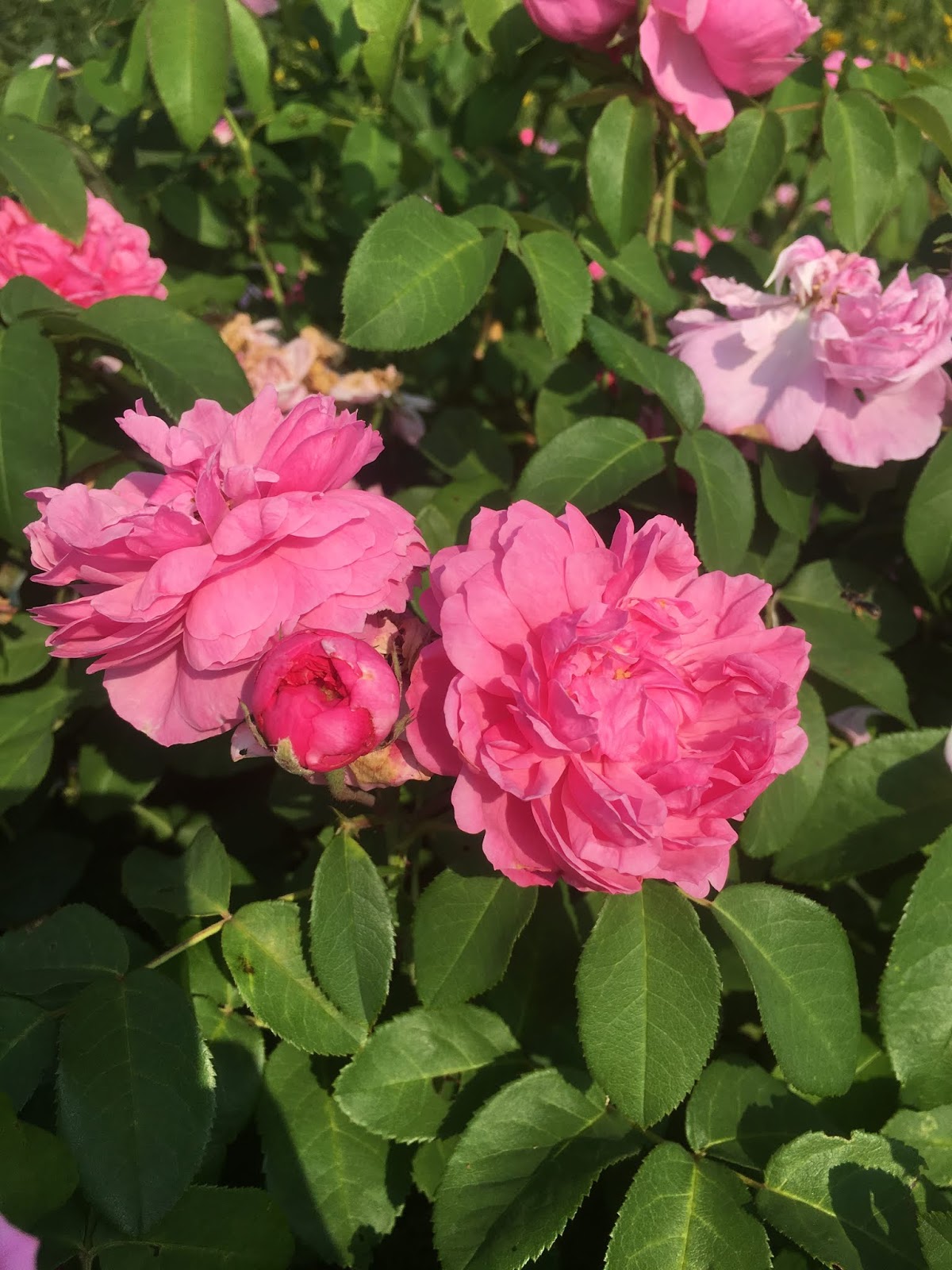

 Vado spesso in Scandinavia e L anno scorso Copenhagen vedevo giardini botanici dove si annaffiavano alberi con annaffiatoi... non sono attrezzati. Ho visto molti amici Belgi che hanno sempre giardini fioriti a causa del clima, con problemi.


 Il clima sta cambiando e L Italia avrebbe molto da insegnare visto i salti mortali che come giardinieri, per fare sopravvivere le piante da sbalzi di freddo al caldo africano. ha fatto per secoli, ma si crogiola nel suo esterofilo e ignorante snobbismo e si ferma nella superficie dei paesi nordici che sono molto bravi a nascondersi dietro a convenzioni piacevoli. Amo particolarmente uk e passi nordici ma amare vuol dire avere senso critico .
Ciao Il vero giardinaggio che ha inspirato la Dutch wave tanto di moda qui, e che viene perché é di moda in Uk, non é che un manieristico rimpasto della scuola tedesca , che questa si ha ancora molto da insegnarci come serietà di progettaZione e di uso delle piante. Il dry garden alla beth chatto é inutile con nostro clima, guardiamo a situazioni mediterranee come la Francia, California. Australia.In Piemonte ho visto giardini provati dal estate ma belli. Ne parlerò inseguito adesso carrellata di foto ( parte di palazzo madama curato da Edoardo e da un progetto che sta creando che parlerò in seguito )
Il clima sta cambiando e L Italia avrebbe molto da insegnare visto i salti mortali che come giardinieri, per fare sopravvivere le piante da sbalzi di freddo al caldo africano. ha fatto per secoli, ma si crogiola nel suo esterofilo e ignorante snobbismo e si ferma nella superficie dei paesi nordici che sono molto bravi a nascondersi dietro a convenzioni piacevoli. Amo particolarmente uk e passi nordici ma amare vuol dire avere senso critico .
Ciao Il vero giardinaggio che ha inspirato la Dutch wave tanto di moda qui, e che viene perché é di moda in Uk, non é che un manieristico rimpasto della scuola tedesca , che questa si ha ancora molto da insegnarci come serietà di progettaZione e di uso delle piante. Il dry garden alla beth chatto é inutile con nostro clima, guardiamo a situazioni mediterranee come la Francia, California. Australia.In Piemonte ho visto giardini provati dal estate ma belli. Ne parlerò inseguito adesso carrellata di foto ( parte di palazzo madama curato da Edoardo e da un progetto che sta creando che parlerò in seguito )
lunedì 29 luglio 2019
Il giardino degli innamorati
 Paola Colucci é una persona speciale: e il suo giardino ne é lo specchio. In questi giorni avrò l’onore di cavar erbacce e ammirare questo giardino, che oltre le mani amorevoli di Paola, ha avuto dei contributi eccellenti ( oltre i suoi che sono onnipresenti )nella sua genesi: Michele Calore creatore del conclamato Paradis des Papillons, E dei suggerimenti da parte del fantastico garden designer Matteo La Civita ( oro al Chelsea flower show) Paola malgrado abbia fatto un bellissimo giardino é estremamente umile e non ha paura di lasciare lo spazio ad altri di interpretare certi angoli del proprio giardino pur avendolo costruito da sola.
Il giardino ha due ‘piani’, erano due appezzamenti comprati in fase successive. La casa é stata da quel che ricordo fatta da loro. E conoscendo Daniele, che é una specie di macchina da guerra, che riesce a fare tutto e ha un armamentario per potere fare o riparare . Nel giardino ha strumenti e materiali per fare qualsiasi cosa meglio di un giardiniere.
Paola Colucci é una persona speciale: e il suo giardino ne é lo specchio. In questi giorni avrò l’onore di cavar erbacce e ammirare questo giardino, che oltre le mani amorevoli di Paola, ha avuto dei contributi eccellenti ( oltre i suoi che sono onnipresenti )nella sua genesi: Michele Calore creatore del conclamato Paradis des Papillons, E dei suggerimenti da parte del fantastico garden designer Matteo La Civita ( oro al Chelsea flower show) Paola malgrado abbia fatto un bellissimo giardino é estremamente umile e non ha paura di lasciare lo spazio ad altri di interpretare certi angoli del proprio giardino pur avendolo costruito da sola.
Il giardino ha due ‘piani’, erano due appezzamenti comprati in fase successive. La casa é stata da quel che ricordo fatta da loro. E conoscendo Daniele, che é una specie di macchina da guerra, che riesce a fare tutto e ha un armamentario per potere fare o riparare . Nel giardino ha strumenti e materiali per fare qualsiasi cosa meglio di un giardiniere. In questo momento di difficoltà é una gran cosa lavorare e da Paola é un vero piacere visto che é anche un ottima cuoca e una compagnia eccelsa .Oggi pulendo la Vinca Major che invade la scarpata, pianta a ellebori e a felci e piena di epatiche in stagione. Paola racconta che le avevano regalato due piantine ed ecco tutto il giardino invaso.
Pulendo la scarpata mi ricordai della mia permanenza a Villa boccanegra dove il mio compito era fare giardinaggio a 90 gradi.
In questo momento di difficoltà é una gran cosa lavorare e da Paola é un vero piacere visto che é anche un ottima cuoca e una compagnia eccelsa .Oggi pulendo la Vinca Major che invade la scarpata, pianta a ellebori e a felci e piena di epatiche in stagione. Paola racconta che le avevano regalato due piantine ed ecco tutto il giardino invaso.
Pulendo la scarpata mi ricordai della mia permanenza a Villa boccanegra dove il mio compito era fare giardinaggio a 90 gradi.  Il giardino nacque da una storia d’amore: quella di Paola e Daniele, entrambi uscenti da altre storie ma si sono trovati e innamorati. Degli alberi furono piantati non pensando che sarebbero diventati così grandi, e con lo scandalo dei vicini che vedevano esterrefatti che gente di città, piantava essenze non mangerecce...
Poi Paola, pianta rosai e perenni. I Rosai sono in super salute. Da ricordare la Gruss an Teplitz, profumatamente e bellissima di Geschwind. La L. Braithwaite, anch essa di un bel rosso. La bellissima paesagista Ferdy e la classica Golden Showers.
Il giardino nacque da una storia d’amore: quella di Paola e Daniele, entrambi uscenti da altre storie ma si sono trovati e innamorati. Degli alberi furono piantati non pensando che sarebbero diventati così grandi, e con lo scandalo dei vicini che vedevano esterrefatti che gente di città, piantava essenze non mangerecce...
Poi Paola, pianta rosai e perenni. I Rosai sono in super salute. Da ricordare la Gruss an Teplitz, profumatamente e bellissima di Geschwind. La L. Braithwaite, anch essa di un bel rosso. La bellissima paesagista Ferdy e la classica Golden Showers.  Bellissimi border di pianti perenni e rose nel ala nord confinanti col vicino a me , costeggiata da un prato fatto a regola d ‘arte da Daniele, che costeggia questo boschetto di cui vi parlai poc’anzi. Questo boschetto é piantato in grandi cuscini di asarum Europeum, epimedium, liriope, reineckia, anemoni giapponesi e Penisetum sotto ogni albero.
Finita l’area boschetto si inalza la collinetta, a cui piedi ci sono una bella collezione di hydrangee. Salendo invece si trovano grandi masse di euphorbia characias sub wulfenii. E più in lá masse di Crocosmia Poi le colline si avvicinano al vecchio orto ( che stá in basso) strapieno di ellebori e felci,sulla collina ci sono anche lì felci ed ellebori, per poi salire nella collina delle meravigliose di gle dove si trova il bellissimo laghetto realizzato da Michele Calore, una festa di piante perenni meravigliose . Questo laghetto si congiunge al vecchio laghetto trasformato in giardino per fiori di loto e equisetum, uno spettacolo.
Poi si prosegue verso il giardino mediterraneo, con salvie etc, per poi arrivare al portale formato dal rosaio ‘Altissimo’ di Delbard con i suoi strepitosi fiori rossi e semplici su arbusti e alberi che creano come un entrata in in altra stanza.
Bellissimi border di pianti perenni e rose nel ala nord confinanti col vicino a me , costeggiata da un prato fatto a regola d ‘arte da Daniele, che costeggia questo boschetto di cui vi parlai poc’anzi. Questo boschetto é piantato in grandi cuscini di asarum Europeum, epimedium, liriope, reineckia, anemoni giapponesi e Penisetum sotto ogni albero.
Finita l’area boschetto si inalza la collinetta, a cui piedi ci sono una bella collezione di hydrangee. Salendo invece si trovano grandi masse di euphorbia characias sub wulfenii. E più in lá masse di Crocosmia Poi le colline si avvicinano al vecchio orto ( che stá in basso) strapieno di ellebori e felci,sulla collina ci sono anche lì felci ed ellebori, per poi salire nella collina delle meravigliose di gle dove si trova il bellissimo laghetto realizzato da Michele Calore, una festa di piante perenni meravigliose . Questo laghetto si congiunge al vecchio laghetto trasformato in giardino per fiori di loto e equisetum, uno spettacolo.
Poi si prosegue verso il giardino mediterraneo, con salvie etc, per poi arrivare al portale formato dal rosaio ‘Altissimo’ di Delbard con i suoi strepitosi fiori rossi e semplici su arbusti e alberi che creano come un entrata in in altra stanza.  Infatti c é la discesa con un arco della Pierre de Ronsard che stando all ombra assume tonalità verdi piacevoli ed é meno color variegato di amerena con colorati rosa Barbie. Ma li vicino ci sono esemplari giganteschi di Mme Alfred Carrière lasciati liberi come arbusti che sono sensazionali. Non lontano c é un rosaio nato da seme impressionante, una Indica major etc... andando verso la fine del giardino si arriva ad arbusti impressionati di Aloha di Boerner e di Zéphirine Drouhin.


 Non
Arrivando verso la fine del giardino con vista su la chiesa di Moruzzo c é una specie di spiazzo dove c é L orto nuovo, che é delimitato da una doppia siepe impressionante della fantasmagorica rosa di Meilland ‘Marie Curie’ amata da Annamaria Sgarabottolo, titolare della Campanella, generalmente intransigente e Gallica only, ma le virtù di questa rosa moderna sono inequivocabili. L orto oltre alle verdure coltivate con maestria per preparare manicaretti sublimi é una pioggia di Zinnie, fiore che generalmente ignoro ma che devo dire fá la sua figura tra gli ortaggi. Ho dimenticato di parlare della gigantesca La mortola che grazie L inizio del orto, con le sue foglie Glauche.
Non
Arrivando verso la fine del giardino con vista su la chiesa di Moruzzo c é una specie di spiazzo dove c é L orto nuovo, che é delimitato da una doppia siepe impressionante della fantasmagorica rosa di Meilland ‘Marie Curie’ amata da Annamaria Sgarabottolo, titolare della Campanella, generalmente intransigente e Gallica only, ma le virtù di questa rosa moderna sono inequivocabili. L orto oltre alle verdure coltivate con maestria per preparare manicaretti sublimi é una pioggia di Zinnie, fiore che generalmente ignoro ma che devo dire fá la sua figura tra gli ortaggi. Ho dimenticato di parlare della gigantesca La mortola che grazie L inizio del orto, con le sue foglie Glauche.

 Parallelo al orto c é un altra creazione di Michele, una border, una Dutch wave alla veneta di estrema maestria. Un nuotare tra echinacee stipe, etc che riempiono gli occhi nella arsura del estate.
Ritornando al arco di Pierre si ridiscende in una meravigliosa scalinata fatta da assi di legno delle ferrovie dismesse,che scendono accanto al enorme Luma apiculata o mirto cileno, con una corteccia colore canella da rimanere esterrefatti dinanzi a tale bellezza. Questa scalinata é parsemée dì Persicaria Filiformis che con le sue foglie a linguetta con un occhio più scuro al centro, sono di colore smeraldo, che si intonano da sogno con il marrone terra di Siena bruciata delle travi. La Macleya con le sue foglie particolari e le sue infiorescenze piumose saettano da questa scalinata che diventa un tripudio di hydrangee paniculate e quericifolie, le cui infiorescenze virginali, che peccaminosamente si tingono di sangue con il proseguire della stagione, perfettamente risaltata dallo smeraldo dell invadente persicaria. Questo giardino é un tripudio di ortensie che potrete vedere nel gruppo Facebook pH 5,5 lovers
Bellissimo.
Parallelo al orto c é un altra creazione di Michele, una border, una Dutch wave alla veneta di estrema maestria. Un nuotare tra echinacee stipe, etc che riempiono gli occhi nella arsura del estate.
Ritornando al arco di Pierre si ridiscende in una meravigliosa scalinata fatta da assi di legno delle ferrovie dismesse,che scendono accanto al enorme Luma apiculata o mirto cileno, con una corteccia colore canella da rimanere esterrefatti dinanzi a tale bellezza. Questa scalinata é parsemée dì Persicaria Filiformis che con le sue foglie a linguetta con un occhio più scuro al centro, sono di colore smeraldo, che si intonano da sogno con il marrone terra di Siena bruciata delle travi. La Macleya con le sue foglie particolari e le sue infiorescenze piumose saettano da questa scalinata che diventa un tripudio di hydrangee paniculate e quericifolie, le cui infiorescenze virginali, che peccaminosamente si tingono di sangue con il proseguire della stagione, perfettamente risaltata dallo smeraldo dell invadente persicaria. Questo giardino é un tripudio di ortensie che potrete vedere nel gruppo Facebook pH 5,5 lovers
Bellissimo. Paola Colucci is a special person: and her garden is the mirror. In these days I will have the honor of pulling weeds and admiring this garden, which besides the garden dexterity and flair of Paola, had excellent contributions ) in its genesis: Michele Calore creator of the masterpiece: Paradis des Papillons, and some suggestions from the fantastic garden designer Matteo La Civita (gold at the Chelsea flower show) .In spite of having created a beautiful garden, Paola is extremely humble and is not afraid to leave space for others to interpret certain corners of her garden despite having built it most by herself.
The garden has two ‘floors’, they were two plots bought in the following phase. The house was from what I remember from them. And knowing Daniele, who is a kind of war machine, who manages to do everything and has a paraphernalia of DIY and he has tools and materials to do anything almost as a professional gardener.
In this moment of difficulty it is a great thing to work for Paola it is a real pleasure since she is also an excellent cook and an excellent company. Today she cleans the Vinca Major that invades the escarpment, a plant with hellebores and ferns and full of liverworts in season . Paola says that they had given her two plants and this is the whole garden is invaded.
Paola Colucci is a special person: and her garden is the mirror. In these days I will have the honor of pulling weeds and admiring this garden, which besides the garden dexterity and flair of Paola, had excellent contributions ) in its genesis: Michele Calore creator of the masterpiece: Paradis des Papillons, and some suggestions from the fantastic garden designer Matteo La Civita (gold at the Chelsea flower show) .In spite of having created a beautiful garden, Paola is extremely humble and is not afraid to leave space for others to interpret certain corners of her garden despite having built it most by herself.
The garden has two ‘floors’, they were two plots bought in the following phase. The house was from what I remember from them. And knowing Daniele, who is a kind of war machine, who manages to do everything and has a paraphernalia of DIY and he has tools and materials to do anything almost as a professional gardener.
In this moment of difficulty it is a great thing to work for Paola it is a real pleasure since she is also an excellent cook and an excellent company. Today she cleans the Vinca Major that invades the escarpment, a plant with hellebores and ferns and full of liverworts in season . Paola says that they had given her two plants and this is the whole garden is invaded. Cleaning the escarpment, I remembered my stay in Villa boccanegra where my job was to do 90 degree gardening.
The garden was born from a love story: that of Paola and Daniele, both outgoing from other stories but found themselves a in love. Trees were planted not thinking that they would become so large, and with the scandal of neighbors who could not understand why people coming from the city would plant non-edible essences ...
Then Paola, planted rosebushes and perennials. The Rose bushes are in super health. To remember a few :Gruss an Teplitz, a masterpiece from Geschwind. L. Braithwaite, also of a beautiful red. The beautiful landscape rose Ferdy and the classic Golden Showers.
Beautiful border of perennial pl
Cleaning the escarpment, I remembered my stay in Villa boccanegra where my job was to do 90 degree gardening.
The garden was born from a love story: that of Paola and Daniele, both outgoing from other stories but found themselves a in love. Trees were planted not thinking that they would become so large, and with the scandal of neighbors who could not understand why people coming from the city would plant non-edible essences ...
Then Paola, planted rosebushes and perennials. The Rose bushes are in super health. To remember a few :Gruss an Teplitz, a masterpiece from Geschwind. L. Braithwaite, also of a beautiful red. The beautiful landscape rose Ferdy and the classic Golden Showers.
Beautiful border of perennial pl ants and roses in the northern wing bordering a lawn ,which runs along the grove I just wrote of. Below this grove there are big swathes of asarum Europeum, epimedium, liriope, reineckia, Japanese anemones and Penisetum under each tree.
Once the grove area is over, the little hill rises, to whose feet there is a beautiful collection of hydrangeas that you could admire on the group On Facebook pH5,5 lovers.Going up instead there are large masses of euphorbia characias sub wulfenii. And more in the masses of Crocosmia. When the hill approaches the former vegetable garden (which is below) the vegetation starts to be the same: both downhill and uphill n the hill is loaded with a collection of ferns and hellebores. When we arrive on the the hill we get struck by the sheer beauty of the pond designed and planted by Michele Calore with masses of wonderful perennials. This pond joins a previous old pond turned into a garden for lotus flowers and equisetum.
Then we continue towards the Mediterranean garden, with salvias etc, to then arrive at the portal formed by Delbard's "Altissimo" rosebush with its amazing red and simple flowers on shrubs and trees that create an entrance to another room.
ants and roses in the northern wing bordering a lawn ,which runs along the grove I just wrote of. Below this grove there are big swathes of asarum Europeum, epimedium, liriope, reineckia, Japanese anemones and Penisetum under each tree.
Once the grove area is over, the little hill rises, to whose feet there is a beautiful collection of hydrangeas that you could admire on the group On Facebook pH5,5 lovers.Going up instead there are large masses of euphorbia characias sub wulfenii. And more in the masses of Crocosmia. When the hill approaches the former vegetable garden (which is below) the vegetation starts to be the same: both downhill and uphill n the hill is loaded with a collection of ferns and hellebores. When we arrive on the the hill we get struck by the sheer beauty of the pond designed and planted by Michele Calore with masses of wonderful perennials. This pond joins a previous old pond turned into a garden for lotus flowers and equisetum.
Then we continue towards the Mediterranean garden, with salvias etc, to then arrive at the portal formed by Delbard's "Altissimo" rosebush with its amazing red and simple flowers on shrubs and trees that create an entrance to another room.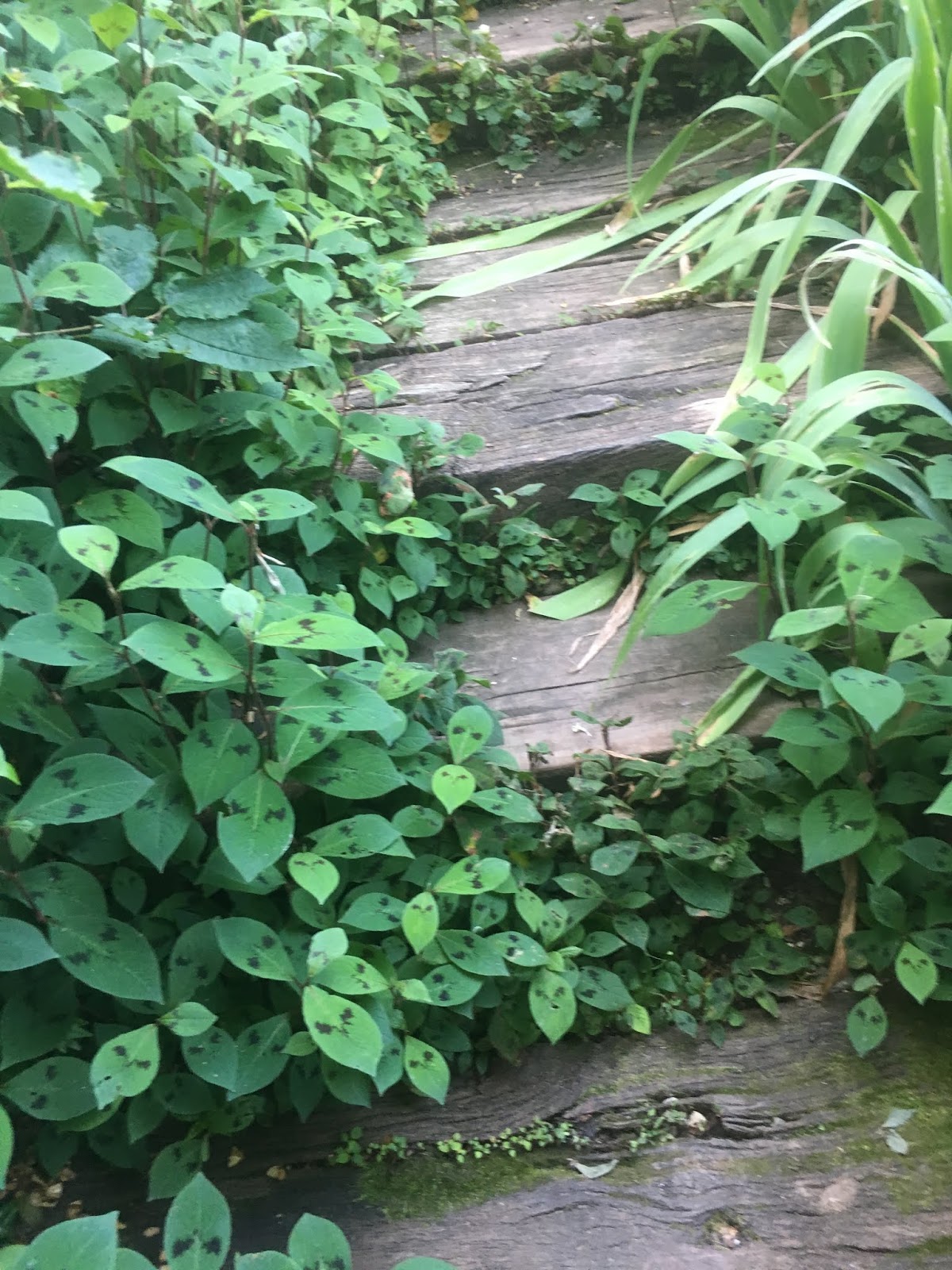 In fact, there is the descent with an arc of the Pierre de Ronsard which, in the shade, takes on pleasant green tones and is less reminiscent of a Barbie girl lipstick . But nearby there are gigantic specimens of Mme Alfred Carrière left free as shrubs that are sensational. Not far away there is a rose born from seed which is huge and impressive , an Indica major etc ... going towards the end of the garden you get to impressed shrubs of Aloha by Boerner and Zéphirine Drouhin

 Once the grove area is r, the little hill rises, to whose feet there is a beautiful collection of hydrangeas. Going up instead there are large masses of euphorbia characias sub wulfenii. And more in the masses of Crocosmia Then the hills approach the old vegetable garden (which is below) full of hellebores and ferns, on the hill there are also ferns and hellebores, and then climb the hill of wonders where the beautiful lake is located made by Michele Calore, a celebration of wonderful perennials. This pond joins the old pond turned into a garden for lotus flowers and equisetum, a show.
 Non
Then we continue towards the Mediterranean garden, with salvie etc, to then arrive at the portal formed by Delbard's "Altissimo" rosebush with its amazing red and simple flowers on shrubs and trees that create an entrance to another room.
In fact, there is the descent with an arc of the Pierre de Ronsard which, in the shade, takes on pleasant green tones and is less variegated than amerena with colored pink Barbies. But nearby there are gigantic specimens of Mme Alfred Carrière left free as shrubs that are sensational. Not far away there is a rose tree born from an impressive seed, an Indica major etc ... going towards the end of the garden you get to impressed shrubs of Aloha by Boerner and Zéphirine Drouhin.
Non
Then we continue towards the Mediterranean garden, with salvie etc, to then arrive at the portal formed by Delbard's "Altissimo" rosebush with its amazing red and simple flowers on shrubs and trees that create an entrance to another room.
In fact, there is the descent with an arc of the Pierre de Ronsard which, in the shade, takes on pleasant green tones and is less variegated than amerena with colored pink Barbies. But nearby there are gigantic specimens of Mme Alfred Carrière left free as shrubs that are sensational. Not far away there is a rose tree born from an impressive seed, an Indica major etc ... going towards the end of the garden you get to impressed shrubs of Aloha by Boerner and Zéphirine Drouhin. to get to this end of the garden with a view of the church of Moruzzo there is a sort of open space where there is the new vegetable garden, which is bordered by a double impressive hedge of Meilland s 'Marie Curie' a great modern rose loved by Annamaria Sgarabottolo, owner of the Campanella nursery specialised in Gallica roses only. The vegetable garden in addition to the produce cultivated with skill to prepare sublime delicacies there are a multitude of Zinnias. It is a flower that I generally ignore but which I must acknowledge is stunning among vegetables. I forgot to mention the gigantic La mortola rose which embellishes the beginning of the vegetable garden.
Parallel to the vegetable garden is another creation by Michele, a border, a Dutch wave mixed with Venetian mastery. A swim between echinacee stipas etc. that fill the eyes in the heat of summer.
Returning to the arch of Pierre, it descends again into a marvelous staircase made of wooden boards of the disused railways, which descend next to the enormous Luma apiculata or Chilean myrtle, with cinnamon -colored bark which is breathtaking.This stairway is parsemée of Persicaria Filiformis which, with its tongue-like leaves with a darker eye in the center, are emerald in colour,which blend dreamily with the burnt sienna brown of the beams. The Macleya with its particular leaves and its feathery inflorescences dart from this stairway which becomes a riot of paniculate and quericifolia hydrangeas, whose virginal inflorescences, which sinfully take on blood with the continuation of the season, perfectly highlighted by the emerald of the intrusive persicaria .
Very beautiful
to get to this end of the garden with a view of the church of Moruzzo there is a sort of open space where there is the new vegetable garden, which is bordered by a double impressive hedge of Meilland s 'Marie Curie' a great modern rose loved by Annamaria Sgarabottolo, owner of the Campanella nursery specialised in Gallica roses only. The vegetable garden in addition to the produce cultivated with skill to prepare sublime delicacies there are a multitude of Zinnias. It is a flower that I generally ignore but which I must acknowledge is stunning among vegetables. I forgot to mention the gigantic La mortola rose which embellishes the beginning of the vegetable garden.
Parallel to the vegetable garden is another creation by Michele, a border, a Dutch wave mixed with Venetian mastery. A swim between echinacee stipas etc. that fill the eyes in the heat of summer.
Returning to the arch of Pierre, it descends again into a marvelous staircase made of wooden boards of the disused railways, which descend next to the enormous Luma apiculata or Chilean myrtle, with cinnamon -colored bark which is breathtaking.This stairway is parsemée of Persicaria Filiformis which, with its tongue-like leaves with a darker eye in the center, are emerald in colour,which blend dreamily with the burnt sienna brown of the beams. The Macleya with its particular leaves and its feathery inflorescences dart from this stairway which becomes a riot of paniculate and quericifolia hydrangeas, whose virginal inflorescences, which sinfully take on blood with the continuation of the season, perfectly highlighted by the emerald of the intrusive persicaria .
Very beautiful  Non
Non
giovedì 4 luglio 2019
 in inglese: Independence Day), noto anche come 4 luglio, è la festa nazionale degli Stati Uniti che commemora l'adozione della Dichiarazione d'indipendenza degli Stati Uniti d'America il 4 luglio 1776, con la quale le Tredici colonie si distaccarono dal Regno di Gran Bretagna. I festeggiamenti vengono svolti solitamente attraverso fuochi d'artificio, parate, barbecue, picnic, concerti, partite di baseball, partite di basket, cerimonie e altri eventi pubblici/privati che celebrano la storia, il governo e le tradizioni degli Stati Uniti d'America.
Per quanto vi fossero già stati alcuni scontri fra i coloni ribelli e l'esercito britannico, la dichiarazione di indipendenza segnò il vero inizio della Rivoluzione americana che 7 anni dopo si sarebbe conclusa con la vittoria dell'esercito continentale di George Washington sulle forze di re Giorgio III.
Di fatto, la riunione del Congresso di Filadelfia guidato da John Adams uno dei maggiori leader americani che combatté per l'indipendenza americana, fu un momento fondamentale nella lotta dei coloni contro la Gran Bretagna, tanto che portò la situazione a sfociare in una vera e propria rivoluzione volta a rovesciare la politica esistente ponendo così in primo piano i diritti dei coloni che fino ad ora non erano stati rispettati dalla madrepatria.
Il documento, richiesto e scritto da Thomas Jefferson, non mirò propriamente a definire una nuova forma di governo e pertanto non va confuso con la futura Costituzione degli Stati Uniti d'America. L'obiettivo fu invece quello di rafforzare il supporto interno alla propria battaglia, incoraggiando così l'intervento a proprio favore di alcune potenze europee, in particolare la Francia, che in seguito si unirono al conflitto.
Questo breve plagio a Wikipedia, serve per ricordare un evento, importante della storia che dal mio punto di vista considero storia recente.
L’ inizio della fine del dominio europeo e il liberarsi dai sopprusi dei tiranni. Lo capisco bene perché stó vivendo una situazione simile. Da persona che sopporta mi stó ribellando ai sopprosi di gente bulla.
Gli americani alla fine non impararono la lezione, e a loro volta dominarono il mondo, e Lincoln disse nei suoi diari, se grazie alla successiva guerra civile, libereremo qualche schiavo, ben venga. Questa referenza non é parola per parola, ma questo é il messaggio. Ma siamo umani, e gli ex schiavi che si trasferirono nella martoriata Liberia, schiavizzarono i nativi. É difficile da vittima non diventare carnefice. Parlo di quattro luglio per parlare della rosa Hanabi o anche detta Fourth of July.
Questa rosa é una rampicante vistosa, screziata, rifiorente, un buon prodotto commerciale. Tom Carruth, é un grandissimo ibridatore, non particolarmente innovativo.
in inglese: Independence Day), noto anche come 4 luglio, è la festa nazionale degli Stati Uniti che commemora l'adozione della Dichiarazione d'indipendenza degli Stati Uniti d'America il 4 luglio 1776, con la quale le Tredici colonie si distaccarono dal Regno di Gran Bretagna. I festeggiamenti vengono svolti solitamente attraverso fuochi d'artificio, parate, barbecue, picnic, concerti, partite di baseball, partite di basket, cerimonie e altri eventi pubblici/privati che celebrano la storia, il governo e le tradizioni degli Stati Uniti d'America.
Per quanto vi fossero già stati alcuni scontri fra i coloni ribelli e l'esercito britannico, la dichiarazione di indipendenza segnò il vero inizio della Rivoluzione americana che 7 anni dopo si sarebbe conclusa con la vittoria dell'esercito continentale di George Washington sulle forze di re Giorgio III.
Di fatto, la riunione del Congresso di Filadelfia guidato da John Adams uno dei maggiori leader americani che combatté per l'indipendenza americana, fu un momento fondamentale nella lotta dei coloni contro la Gran Bretagna, tanto che portò la situazione a sfociare in una vera e propria rivoluzione volta a rovesciare la politica esistente ponendo così in primo piano i diritti dei coloni che fino ad ora non erano stati rispettati dalla madrepatria.
Il documento, richiesto e scritto da Thomas Jefferson, non mirò propriamente a definire una nuova forma di governo e pertanto non va confuso con la futura Costituzione degli Stati Uniti d'America. L'obiettivo fu invece quello di rafforzare il supporto interno alla propria battaglia, incoraggiando così l'intervento a proprio favore di alcune potenze europee, in particolare la Francia, che in seguito si unirono al conflitto.
Questo breve plagio a Wikipedia, serve per ricordare un evento, importante della storia che dal mio punto di vista considero storia recente.
L’ inizio della fine del dominio europeo e il liberarsi dai sopprusi dei tiranni. Lo capisco bene perché stó vivendo una situazione simile. Da persona che sopporta mi stó ribellando ai sopprosi di gente bulla.
Gli americani alla fine non impararono la lezione, e a loro volta dominarono il mondo, e Lincoln disse nei suoi diari, se grazie alla successiva guerra civile, libereremo qualche schiavo, ben venga. Questa referenza non é parola per parola, ma questo é il messaggio. Ma siamo umani, e gli ex schiavi che si trasferirono nella martoriata Liberia, schiavizzarono i nativi. É difficile da vittima non diventare carnefice. Parlo di quattro luglio per parlare della rosa Hanabi o anche detta Fourth of July.
Questa rosa é una rampicante vistosa, screziata, rifiorente, un buon prodotto commerciale. Tom Carruth, é un grandissimo ibridatore, non particolarmente innovativo. Ma non sempre l’essere dei visionari é essenziale. L originalità é un ossesione occidentale totalmente discutibile. Tom ha fatto rose eccezionali, dal profumo speziato come Julia Child, Blue Eden, Purple Eden etc. Ma il grande animo di questo grande ibridatore, é dopo una lunga carriera di successo nella multinazionale delle rose Weeks, ha deciso di essere il Curatore, di uno dei grandi centri di rose rare che si chiama L Huntington gardens a Los Angeles.
La California é per le rose e la creazione di nuove piante di grande importanza. Lo svedese Gustav Eisen fece molto tra le specie introdotte, la sua amicizia con
Alice Eastwood, grandissima botanica, e per il suo grande lavoro in seguito come vivaista geniale. Poco distante c era il vivaio di Ralph Moore, geniale ibridatore visionario che riuscì nel impresa di fornire la variegatura eccezionale della rosa antica (ibrido perenne) nelle rose moderne, en in particolare nelle miniature di cui lui era famoso. Chissà se conobbe Gustaf Eisen che pochi conoscono.
Uno dei suoi successi é appunto Stars and Stripes
Ma non sempre l’essere dei visionari é essenziale. L originalità é un ossesione occidentale totalmente discutibile. Tom ha fatto rose eccezionali, dal profumo speziato come Julia Child, Blue Eden, Purple Eden etc. Ma il grande animo di questo grande ibridatore, é dopo una lunga carriera di successo nella multinazionale delle rose Weeks, ha deciso di essere il Curatore, di uno dei grandi centri di rose rare che si chiama L Huntington gardens a Los Angeles.
La California é per le rose e la creazione di nuove piante di grande importanza. Lo svedese Gustav Eisen fece molto tra le specie introdotte, la sua amicizia con
Alice Eastwood, grandissima botanica, e per il suo grande lavoro in seguito come vivaista geniale. Poco distante c era il vivaio di Ralph Moore, geniale ibridatore visionario che riuscì nel impresa di fornire la variegatura eccezionale della rosa antica (ibrido perenne) nelle rose moderne, en in particolare nelle miniature di cui lui era famoso. Chissà se conobbe Gustaf Eisen che pochi conoscono.
Uno dei suoi successi é appunto Stars and Stripes un nonno di Fourth of July. I suoi genitori sono la famossima rampicante afiore semplie Altissimo di Delbard, e un ibrido del geniale Samuel Darragh mcgredy 4 che ha come ascendenza la grande miniature da lui create, Anytime e le rose dipinte a mano che hanno le rosa spinosissima come capostipiti.
Independence Day (colloquial: the Fourth of July) is a federal holiday in the United States commemorating the Declaration of Independence of the United States, on July 4, 1776. The Continental Congress declared that the thirteen American colonies were no longer subject (and subordinate) to the monarch of Britain and were now united, free, and independent states.The Congress had voted to secede two days earlier, on July 2, but it was not declared until July 4.
The Continental Congress declared that the thirteen American colonies were no longer subject (and subordinate) to the monarch of Britain and were now united, free, and independent states.The Congress had voted to secede two days earlier, on July 2, but it was not declared until July 4.g the American Revolution, the legal separation of the Thirteen Colonies from Great Britain in 1776 actually occurred on July 2, when the Second Continental Congress voted to approve a resolution of independence that had been proposed in June by Richard Henry Lee of Virginia declaring the United States independent from Great Britain's rule.[5][6] After voting for independence, Congress turned its attention to the Declaration of Independence, a statement explaining this decision, which had been prepared by a Committee of Five, with Thomas Jefferson as its principal author. Congress debated and revised the wording of the Declaration, finally approving it two days later on July 4.
his brief plagiarism to Wikipedia, serves to remember an event, important in history that from my point of view I consider recent history.
The beginning of the end of European domination and the liberation from the suppressed tyrants. I understand it well because i m experiencing a situation of oppression . The historical event is a n excauebto talk about the Hanabi rose or also called Fourth of July.
This rose is a showy, mottled, ever-flowering climber, a good commercial product. Tom Carruth, is a great breeder, not particularly innovative.
But being visionaries is not always essential. Originality is a totally questionable Western obsession. Tom made exceptional roses, with a spicy fragrance like Julia Child, Blue Eden, Purple Eden etc. But the great soul of this great breeder, is after a long and successful career in the rose multinational Weeks, he decided to be the Curator, of One of the great centers of rare roses called L Huntington Gardens in Los Angeles.
California is for roses and the creation of new plants of great importance. The Swedish Gustav Eisen did very well, his friendship with
Alice Eastwood, great botanist, and for her great work later as a brilliant nurseryman. Not far away was the nursery of Ralph Moore, a brilliant visionary hybridizer who managed to interpret the exceptional variegation of the ancient rose (perennial hybrid) in modern roses, particularly in the miniatures of which he was famous. I wonder if he met Gustaf Eisen, who few know.
One of his successes is Stars and Stripes, a grandfather of Fourth of July. His parents are the famous climber Altissimo by Delbard , and a hybrid of the brilliant Samuel Darragh mcgredy 4 which has in its ancestry the great miniature he created :, Anytime and the hand-painted roses that have Spinossima roses as progenitors.
Pictures taken from the web :fourth of July then purple eden , then Stars and Stripes
un nonno di Fourth of July. I suoi genitori sono la famossima rampicante afiore semplie Altissimo di Delbard, e un ibrido del geniale Samuel Darragh mcgredy 4 che ha come ascendenza la grande miniature da lui create, Anytime e le rose dipinte a mano che hanno le rosa spinosissima come capostipiti.
Independence Day (colloquial: the Fourth of July) is a federal holiday in the United States commemorating the Declaration of Independence of the United States, on July 4, 1776. The Continental Congress declared that the thirteen American colonies were no longer subject (and subordinate) to the monarch of Britain and were now united, free, and independent states.The Congress had voted to secede two days earlier, on July 2, but it was not declared until July 4.
The Continental Congress declared that the thirteen American colonies were no longer subject (and subordinate) to the monarch of Britain and were now united, free, and independent states.The Congress had voted to secede two days earlier, on July 2, but it was not declared until July 4.g the American Revolution, the legal separation of the Thirteen Colonies from Great Britain in 1776 actually occurred on July 2, when the Second Continental Congress voted to approve a resolution of independence that had been proposed in June by Richard Henry Lee of Virginia declaring the United States independent from Great Britain's rule.[5][6] After voting for independence, Congress turned its attention to the Declaration of Independence, a statement explaining this decision, which had been prepared by a Committee of Five, with Thomas Jefferson as its principal author. Congress debated and revised the wording of the Declaration, finally approving it two days later on July 4.
his brief plagiarism to Wikipedia, serves to remember an event, important in history that from my point of view I consider recent history.
The beginning of the end of European domination and the liberation from the suppressed tyrants. I understand it well because i m experiencing a situation of oppression . The historical event is a n excauebto talk about the Hanabi rose or also called Fourth of July.
This rose is a showy, mottled, ever-flowering climber, a good commercial product. Tom Carruth, is a great breeder, not particularly innovative.
But being visionaries is not always essential. Originality is a totally questionable Western obsession. Tom made exceptional roses, with a spicy fragrance like Julia Child, Blue Eden, Purple Eden etc. But the great soul of this great breeder, is after a long and successful career in the rose multinational Weeks, he decided to be the Curator, of One of the great centers of rare roses called L Huntington Gardens in Los Angeles.
California is for roses and the creation of new plants of great importance. The Swedish Gustav Eisen did very well, his friendship with
Alice Eastwood, great botanist, and for her great work later as a brilliant nurseryman. Not far away was the nursery of Ralph Moore, a brilliant visionary hybridizer who managed to interpret the exceptional variegation of the ancient rose (perennial hybrid) in modern roses, particularly in the miniatures of which he was famous. I wonder if he met Gustaf Eisen, who few know.
One of his successes is Stars and Stripes, a grandfather of Fourth of July. His parents are the famous climber Altissimo by Delbard , and a hybrid of the brilliant Samuel Darragh mcgredy 4 which has in its ancestry the great miniature he created :, Anytime and the hand-painted roses that have Spinossima roses as progenitors.
Pictures taken from the web :fourth of July then purple eden , then Stars and Stripes
venerdì 28 giugno 2019
Judy gardland rose ,and gay liberation movement
 The rose bred by Harkness in 1978 has like her namesake contrasting opinions from people :” in that It’s simply shocking to find out that Judy Garland is barely offered in commerce. It has so many strong attributes and accolades. The fragrance should be listed as “strong”. It’s fresh like a freesia, and unlike any other Rose I have. I would call it Cashmere Bouquet soap fragrance. (Not fruity, not myrrh, not rose). foliage is extremely healthy, the flowers last for many days on the plant, the buds open lemon yellow, and as they twist open, they become sun kissed as Double Delight does, except this one has a multitude of color hues from gold, cantaloupe, tangerine, and an intense tomato red at the base petals.
Does exceptionally well with simply feeding good quality compost, food (tea) and regular weeding.”
“Helpmefind roses 🥀 user)
The rose bred by Harkness in 1978 has like her namesake contrasting opinions from people :” in that It’s simply shocking to find out that Judy Garland is barely offered in commerce. It has so many strong attributes and accolades. The fragrance should be listed as “strong”. It’s fresh like a freesia, and unlike any other Rose I have. I would call it Cashmere Bouquet soap fragrance. (Not fruity, not myrrh, not rose). foliage is extremely healthy, the flowers last for many days on the plant, the buds open lemon yellow, and as they twist open, they become sun kissed as Double Delight does, except this one has a multitude of color hues from gold, cantaloupe, tangerine, and an intense tomato red at the base petals.
Does exceptionally well with simply feeding good quality compost, food (tea) and regular weeding.”
“Helpmefind roses 🥀 user) Non
Don't be shocked by its lack of distribution. Once the patent goes off, there is little push to keep a variety in commerce. There has to be room to introduce more patented varieties or there is lost profit and rare is the business which doesn't adhere to the current "the only reason for business is to profit the share holders" mantra. Having grow (n) Judy Garland for years in Southern California, I found it to be a prickly monster whose flowers smelled good and quickly sunburned into a nasty color. I had it when it was a new introduction and hoped to love it. I didn't, so it went to a new home after several years in the garden. But, "location, location, location" is the key and that wasn't it. Kim Rupert replied to the helpmefind user. He is like Greg Lowery a hero for me. Greg did a great effort to make old roses widespread, and many old varieties have been saved by oblivion thanks to his epic effort.
Kim Rupert is another hero of mine, he is an innovative rose breeder which has been using, unusual species and varieties in his breeding line. Both of them are heroes, fighting the globalised market, promoting what is different from mainstream. Following a line of crazy genius in that part of California, with Paul Barden, Ralph Moore, and the unknown Gustav Eisen but I will speak about this line of pioneers in another post( some have been already been described in previous posts.
Non
Don't be shocked by its lack of distribution. Once the patent goes off, there is little push to keep a variety in commerce. There has to be room to introduce more patented varieties or there is lost profit and rare is the business which doesn't adhere to the current "the only reason for business is to profit the share holders" mantra. Having grow (n) Judy Garland for years in Southern California, I found it to be a prickly monster whose flowers smelled good and quickly sunburned into a nasty color. I had it when it was a new introduction and hoped to love it. I didn't, so it went to a new home after several years in the garden. But, "location, location, location" is the key and that wasn't it. Kim Rupert replied to the helpmefind user. He is like Greg Lowery a hero for me. Greg did a great effort to make old roses widespread, and many old varieties have been saved by oblivion thanks to his epic effort.
Kim Rupert is another hero of mine, he is an innovative rose breeder which has been using, unusual species and varieties in his breeding line. Both of them are heroes, fighting the globalised market, promoting what is different from mainstream. Following a line of crazy genius in that part of California, with Paul Barden, Ralph Moore, and the unknown Gustav Eisen but I will speak about this line of pioneers in another post( some have been already been described in previous posts.  Kim points out the problem of the patent of roses, which make one variety rentable till it expieries. This explains why so many good varieties are no longer on the market even though they are really good. With David Austin roses this commercial strategy it is more evident. David Austin roses are not plants and a commercial product but a dream. David Austin marketing strategy is to sell a dream and poetry. So people get quite emotionally attached to those roses, evoking Shakespearean plays etc. So they get quite frustrated to not find them anymore on the David Austin’ s catalogue. The new varieties are sold as improvements, but it is a mere commercial strategy.
This is a common strategy among commercial hybridisers, to enjoy the money deriving from the patent, and then discarding the variety as soon as the patent expires, since it is more rentable to have a new variety than to renew the patent.
Kim points out the problem of the patent of roses, which make one variety rentable till it expieries. This explains why so many good varieties are no longer on the market even though they are really good. With David Austin roses this commercial strategy it is more evident. David Austin roses are not plants and a commercial product but a dream. David Austin marketing strategy is to sell a dream and poetry. So people get quite emotionally attached to those roses, evoking Shakespearean plays etc. So they get quite frustrated to not find them anymore on the David Austin’ s catalogue. The new varieties are sold as improvements, but it is a mere commercial strategy.
This is a common strategy among commercial hybridisers, to enjoy the money deriving from the patent, and then discarding the variety as soon as the patent expires, since it is more rentable to have a new variety than to renew the patent. We can realiste that both the rose and the actual Judy suffered from popularity. The rose suffered from a decline of popularity whereas the Diva, just the pain, and the various addictions.
Judy suffered a great deal, and many gay men, could empathise and mirror Judy s struggles, and her dramatic figure and the somewhat grotesque and hysterical attitude, due to sheer injustice and discrimination.
Friend of Dorothy, was an innuendo to say gay when it was dangerous to say that aloud.
Dorothy and the Wizard of Oz, made Judy a celebrity.
The rainbow flag, was apparently (but it has not been proved yet) was inspired by the film ( the song somewhere over the rainbow is a gay classic ), and Dorothy was eager to accept strange people ( queer s etymology means strange)and the character of the lion had a very camp demeanor, sometimes leaning towards the cliché. The rose has almost all the colours of the rainbow, and it was chosen for that reason.
Apart from the queer and freak aspect of most of the characters of the film which is a good material for Drags, which we love. Gays recognise the issue of province towns, like Kansas, where everything is black and white, whereas Oz is a world full of colours and magic, like the big cities which attracts gay men, dreaming of a place with less discrimination.
Rivera states that the Stonewall movement,starts as a mourning reunion after Judy Gardland s funeral, which ended up in the first riot which turned into a real revolution for gay rights. For me to come out of the closet has not been easy,hearing bad things about homosexuals in my family, since I was a child.
My feminine aspects were supposed to be limited as possible. But I grew up in a quite opening environment, so it was not a real deal after all. But the rights for gay men in this country are far from being stable, and the political situation is far from being safe, and the new rights are far from being accepted.
Internal homophobia is widespread among gays were effeminate gays are considered the reason why there is homophobia.
To look like a straight man, and ‘normal is the rule. More than often on apps, man to man is the rule and no fems (feminine ) is the normality. The gay world has lost all his revolutionary aspect of contrasting the heterosexual mainstream, and it has been included and became a mere capitalist trap. Heterosexual normality became the new aspiration of gay men, wanting to transform those patriarchal idea in a pink hue. Hence no bridge between gays, women and other minorities. The revolutionary ideas of stonewall, are gone, but they need to be revisited.
Transvestites were the one which started all this and the balance between the masculine and the feminine is what made gays leaders in the arts and in spritituality. Homophobia, inner homophobia needs to be thought. Roses can be a way.
This post was inspired by the bearlicious magazine online .The post is moving and very well documented of a part of history which has changed history. This Italian gay group is doing a lot to create a community, spreading culture and sociality, something which has become very rare in the gay community.
Pictures are taken from the net .
#stonewall #judygardland #gayrights
We can realiste that both the rose and the actual Judy suffered from popularity. The rose suffered from a decline of popularity whereas the Diva, just the pain, and the various addictions.
Judy suffered a great deal, and many gay men, could empathise and mirror Judy s struggles, and her dramatic figure and the somewhat grotesque and hysterical attitude, due to sheer injustice and discrimination.
Friend of Dorothy, was an innuendo to say gay when it was dangerous to say that aloud.
Dorothy and the Wizard of Oz, made Judy a celebrity.
The rainbow flag, was apparently (but it has not been proved yet) was inspired by the film ( the song somewhere over the rainbow is a gay classic ), and Dorothy was eager to accept strange people ( queer s etymology means strange)and the character of the lion had a very camp demeanor, sometimes leaning towards the cliché. The rose has almost all the colours of the rainbow, and it was chosen for that reason.
Apart from the queer and freak aspect of most of the characters of the film which is a good material for Drags, which we love. Gays recognise the issue of province towns, like Kansas, where everything is black and white, whereas Oz is a world full of colours and magic, like the big cities which attracts gay men, dreaming of a place with less discrimination.
Rivera states that the Stonewall movement,starts as a mourning reunion after Judy Gardland s funeral, which ended up in the first riot which turned into a real revolution for gay rights. For me to come out of the closet has not been easy,hearing bad things about homosexuals in my family, since I was a child.
My feminine aspects were supposed to be limited as possible. But I grew up in a quite opening environment, so it was not a real deal after all. But the rights for gay men in this country are far from being stable, and the political situation is far from being safe, and the new rights are far from being accepted.
Internal homophobia is widespread among gays were effeminate gays are considered the reason why there is homophobia.
To look like a straight man, and ‘normal is the rule. More than often on apps, man to man is the rule and no fems (feminine ) is the normality. The gay world has lost all his revolutionary aspect of contrasting the heterosexual mainstream, and it has been included and became a mere capitalist trap. Heterosexual normality became the new aspiration of gay men, wanting to transform those patriarchal idea in a pink hue. Hence no bridge between gays, women and other minorities. The revolutionary ideas of stonewall, are gone, but they need to be revisited.
Transvestites were the one which started all this and the balance between the masculine and the feminine is what made gays leaders in the arts and in spritituality. Homophobia, inner homophobia needs to be thought. Roses can be a way.
This post was inspired by the bearlicious magazine online .The post is moving and very well documented of a part of history which has changed history. This Italian gay group is doing a lot to create a community, spreading culture and sociality, something which has become very rare in the gay community.
Pictures are taken from the net .
#stonewall #judygardland #gayrights
domenica 23 giugno 2019
San Giovanni e i fiori
 Il sole del solstizio estivo ha un influsso benefici su tutti i fiori, come viene testimoniato dalla notte di San Giovanni. Il Solstizio d’estate non é soltanto il periodo in cui il sole raggiunge la sua massima declinazione positiva nello zodiaco celeste . Omero descrive nell’Odissea che la porta degli uomini é volta a nord (Borea: infatti al sostizionestivo il sole si trova a nord dell’equatore celeste) mentre quella degli Dei, si é orientata verso Sud, perché l’astro si trova a sud nel solstizio invernale.
 Quindi passaggio tra spazio,soggetto a aspazialitá e eternitá. É quindi una via simbolica verso la caverna cosmica, e quindi la festa cosmica serve come protezione del creato. Quindi faló per proteggere i raccolti (in maniera simbolica) e la raccolta di erbe di San Giovanni esposte alla rugiada ( o in Friuli i mazzi che servono come protezione annuale, come gli ulivi in settimana santa )dai poteri miracolosi.
Le acqua e la rugiada di San Giovanni sono collegate al simbolo del cancro, domiciliato nella luna, e quindi il collegamento acqua/ luna é assai evidente.
Le erbe di San Giovanni sono varie, tra cui l’aglio, la cipolla, lavanda, msntuccia, al corbezzolo, al iperico( St. John s worth in inglese: erba di San Giovanni) i Fiori venivano usati per sapere L identità di un futuro fidanzato. Si potevano mettere i nomi dei vari pretendenti in un bacinella con sandalo, alveare rosea e rosmarino e il foglietto che si piegava ere il nome del pretendente da sposare.
Le erbe più popolari sono la felce maschio,che le streghe usano per rendersi invisibili e tanti altri miti.
L’ipericum perfoliatum é un cacciadiavoli, ottimo contra le ustioni, veniva usato come potente strumento contro le presenze demoniache .
Quindi passaggio tra spazio,soggetto a aspazialitá e eternitá. É quindi una via simbolica verso la caverna cosmica, e quindi la festa cosmica serve come protezione del creato. Quindi faló per proteggere i raccolti (in maniera simbolica) e la raccolta di erbe di San Giovanni esposte alla rugiada ( o in Friuli i mazzi che servono come protezione annuale, come gli ulivi in settimana santa )dai poteri miracolosi.
Le acqua e la rugiada di San Giovanni sono collegate al simbolo del cancro, domiciliato nella luna, e quindi il collegamento acqua/ luna é assai evidente.
Le erbe di San Giovanni sono varie, tra cui l’aglio, la cipolla, lavanda, msntuccia, al corbezzolo, al iperico( St. John s worth in inglese: erba di San Giovanni) i Fiori venivano usati per sapere L identità di un futuro fidanzato. Si potevano mettere i nomi dei vari pretendenti in un bacinella con sandalo, alveare rosea e rosmarino e il foglietto che si piegava ere il nome del pretendente da sposare.
Le erbe più popolari sono la felce maschio,che le streghe usano per rendersi invisibili e tanti altri miti.
L’ipericum perfoliatum é un cacciadiavoli, ottimo contra le ustioni, veniva usato come potente strumento contro le presenze demoniache .
 In molti paesi europei, coloro che danzavano intorno ai fuochi avevano questo fiore tra i capelli, e veniva esposti per impedire ai demoni di entrare nelle case. Il tetrapterum, in altra specie di I, viene usato in uk per scacciare gli spettri.
L Aglio e la cipolla erano usati per scacciare le streghe, che durante L epoca precristiana non avevano valore negativa. Dovevano essere raccolti durante la luna calante per non subire gli effetti di Hecate e del suo corteo di demoni
In molti paesi europei, coloro che danzavano intorno ai fuochi avevano questo fiore tra i capelli, e veniva esposti per impedire ai demoni di entrare nelle case. Il tetrapterum, in altra specie di I, viene usato in uk per scacciare gli spettri.
L Aglio e la cipolla erano usati per scacciare le streghe, che durante L epoca precristiana non avevano valore negativa. Dovevano essere raccolti durante la luna calante per non subire gli effetti di Hecate e del suo corteo di demoni È
La ruta é un potente scaccia demoni.
L artemisia avrebbe come etimologia Artemis ed é una pianta lunare, e quindi accelerare le mestruazioni, favorire i parti, scongiurare i falsi parti, epilessia, antiveleno etc. Si dice che l’artemisia abbia cercato di impedire al serpente di tentare Eva, e quindi protetrice dei viaggiatori
La lavanda ha di per sé il termine lavare nella sua etimologia , quindi purezza, pulizia.
La menta é detta erba Santa, e legata a una ninfa amanante di Ade e rivale di Demetra.
Il rosmarino, pianta di una simbologia molto ricca e importabte.
La salvia ha valore magico e divinatorio.
È
La ruta é un potente scaccia demoni.
L artemisia avrebbe come etimologia Artemis ed é una pianta lunare, e quindi accelerare le mestruazioni, favorire i parti, scongiurare i falsi parti, epilessia, antiveleno etc. Si dice che l’artemisia abbia cercato di impedire al serpente di tentare Eva, e quindi protetrice dei viaggiatori
La lavanda ha di per sé il termine lavare nella sua etimologia , quindi purezza, pulizia.
La menta é detta erba Santa, e legata a una ninfa amanante di Ade e rivale di Demetra.
Il rosmarino, pianta di una simbologia molto ricca e importabte.
La salvia ha valore magico e divinatorio.  Tutte queste informazioni sono un libero plagio da Florario di Alfredo Cattabiani e mostrano L’importanza di queste usanze che dove abito sono molto importanti. Stó scrivendo questo post, nel altare della conoscenza botanica friulana da Mirella Collavini, che tra le tante coseé famosa per aver diffuso come tante altre cose, la tradizione dei mazzi di San Giovanni, che colti la sera prima di San Giovanni e lasciati alla guazza ,servivano come protezione annuale della casa.
 Ha tre gatti neri, un giardino dei veleni, uno di San Giovanni e di Carlo Magno. In questa regione magica e dalla forte magia ci sono state la mano pesante dell’ inquisizione, e donne magiche come Mirella, sarebbero, subito viste come streghe, e io come asperger, con la mia capacità di estraniarmi dalla realtà, sarei stato accusato di essere un beneandante, che in momenti di trans proteggevano la natura. Nel libro le amare erbe, parla di Angioletta delle Rive che per L uso delle erbe di San Giovanni, fù condannata a morite in prigione. L’ inquisizione nacque per bloccare l ascesa del protestantesimo e quindi tutto quello che non era nella norma veniva estirpato.
Oggi dopo secoli, L inquisizione é la regola, e il diverso e la natura sono nemici da estirpare.
Quindi il nostro legame con la natura e la magia, sono stati asportati dalla nostra psiche, e viste come cose strane e non come pratiche quotidiane.
Voglio molto bene a Mirella, ed averla come amico é un gran privilegio, perché la sua generosità aristocratica, é di un altro mondo.
Ha tre gatti neri, un giardino dei veleni, uno di San Giovanni e di Carlo Magno. In questa regione magica e dalla forte magia ci sono state la mano pesante dell’ inquisizione, e donne magiche come Mirella, sarebbero, subito viste come streghe, e io come asperger, con la mia capacità di estraniarmi dalla realtà, sarei stato accusato di essere un beneandante, che in momenti di trans proteggevano la natura. Nel libro le amare erbe, parla di Angioletta delle Rive che per L uso delle erbe di San Giovanni, fù condannata a morite in prigione. L’ inquisizione nacque per bloccare l ascesa del protestantesimo e quindi tutto quello che non era nella norma veniva estirpato.
Oggi dopo secoli, L inquisizione é la regola, e il diverso e la natura sono nemici da estirpare.
Quindi il nostro legame con la natura e la magia, sono stati asportati dalla nostra psiche, e viste come cose strane e non come pratiche quotidiane.
Voglio molto bene a Mirella, ed averla come amico é un gran privilegio, perché la sua generosità aristocratica, é di un altro mondo.
 Non pensa mai al ritorno e spesso questa sua generosità, come quello dei fiori e delle erbe, viene sfruttato in maniera poco amorevole. Le streghe fanno paura perché sono loro stesse e non conformano alla moda o quello che gli altri vogliono, ma sono generose e donano sapienza.
Per me la notte di San Giovanni o del solstizio d estate in generlar sono legate a persone che voglio bene, come Mirella, e ad Alexandra amica /sorella che mi ha fatto amare la Svezia dove la tradizione del Midsommar, di ornarsi di fiori e ballare in cerchio davanti a delle forme e icoperte di vegetazione, sono la festa essenziale I questo paese che amo, come anche la sankta Lucia festa del solstizio invernale.
La San Giovanni é festeggiata in Brasile , terra di parte delle mie origini e della mia infanzia, chiamata festa junina, dove vedi popoli di tutti i colori,portare indumenti inspirati a vestiti olandesi del settecento, con balli e fuochi.
Non pensa mai al ritorno e spesso questa sua generosità, come quello dei fiori e delle erbe, viene sfruttato in maniera poco amorevole. Le streghe fanno paura perché sono loro stesse e non conformano alla moda o quello che gli altri vogliono, ma sono generose e donano sapienza.
Per me la notte di San Giovanni o del solstizio d estate in generlar sono legate a persone che voglio bene, come Mirella, e ad Alexandra amica /sorella che mi ha fatto amare la Svezia dove la tradizione del Midsommar, di ornarsi di fiori e ballare in cerchio davanti a delle forme e icoperte di vegetazione, sono la festa essenziale I questo paese che amo, come anche la sankta Lucia festa del solstizio invernale.
La San Giovanni é festeggiata in Brasile , terra di parte delle mie origini e della mia infanzia, chiamata festa junina, dove vedi popoli di tutti i colori,portare indumenti inspirati a vestiti olandesi del settecento, con balli e fuochi.
 Una notte magica, una midsummer night dream, dove come Shakespeare insegna, la magia é lì...
La Magia viene tramandata alle nuove generazioni e Giusy nel suo negozio di erbe, a Udine é tutto una bellezza e una conoscenza incredibile. Oltre le piante che le produce e vende nel suo negozio, fâ anche dei mazzi di San Giovanni, e progetta giardini con una conoscenza botanica immensa, e dal gusto sopraffino. Il suo negozio é pura bellezza e un viaggio spirituale e il mix di botanica, sapienza ed estetica, oltre il valore umano di Giusy sono unici
Prime tre foto del Artista, illustratrice Alexandra Unger e altre foto negozio di Giusi Foschia il cui sito é
Una notte magica, una midsummer night dream, dove come Shakespeare insegna, la magia é lì...
La Magia viene tramandata alle nuove generazioni e Giusy nel suo negozio di erbe, a Udine é tutto una bellezza e una conoscenza incredibile. Oltre le piante che le produce e vende nel suo negozio, fâ anche dei mazzi di San Giovanni, e progetta giardini con una conoscenza botanica immensa, e dal gusto sopraffino. Il suo negozio é pura bellezza e un viaggio spirituale e il mix di botanica, sapienza ed estetica, oltre il valore umano di Giusy sono unici
Prime tre foto del Artista, illustratrice Alexandra Unger e altre foto negozio di Giusi Foschia il cui sito é
Iscriviti a:
Post (Atom)


